COB LED Strip Light
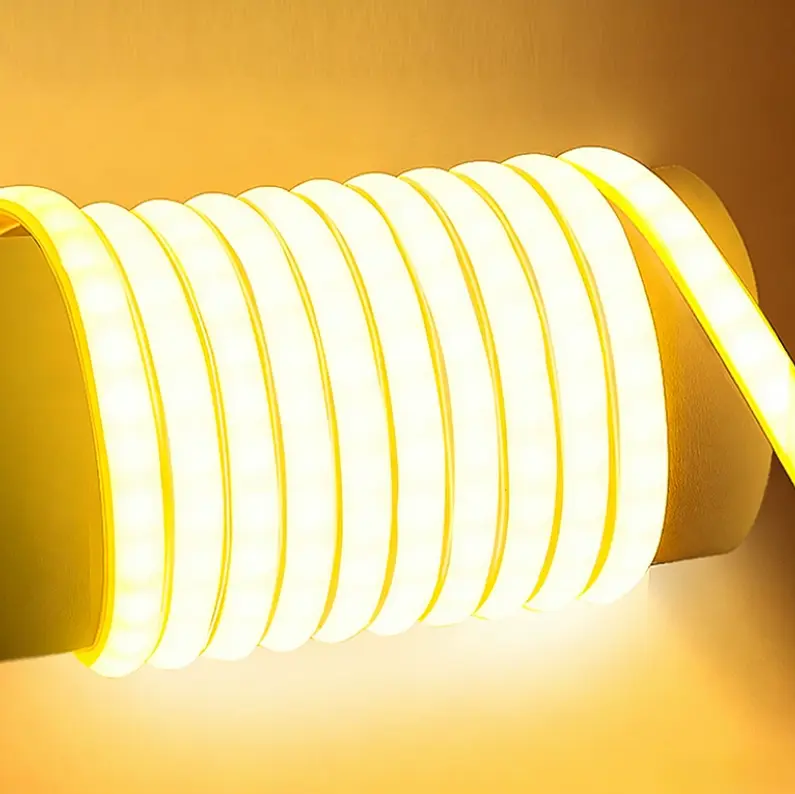
Chip-on-Board (COB) LED strips deliver perfectly uniform, dot-free illumination by embedding densely packed LED chips directly into the substrate. The result is a continuous, smooth line of light — ideal for high-end architectural projects where visible LED dots are unacceptable.
What is COB LED Strip?
COB stands for "Chip on Board" — a technology where hundreds of tiny LED chips are mounted directly onto the flexible PCB and covered with a phosphor layer, creating a continuous and uniform light source with no visible individual LED dots.
Unlike traditional SMD strips where you can see each LED point, COB strips produce a smooth, linear glow similar to neon lighting, but with all the advantages of LED technology: lower power consumption, longer lifespan, and superior controllability.
- Dot-free, uniform light output — no visible hot spots or dark gaps
- High density: 320 to 640+ LEDs per meter
- Excellent color consistency with CRI up to Ra>97
- Flexible and bendable for curved installations
- Available in DC 12V and DC 24V, multiple IP ratings
- Ideal replacement for traditional glass neon at a fraction of the cost
What Determines COB LED Strip Quality?
COB (Chip-on-Board) LED strips achieve their signature dot-free light by packing hundreds of tiny LED dies under a continuous phosphor layer. This construction makes thermal management and material consistency even more critical than with SMD strips.
The #1 Factor: Thermal Management
COB strips concentrate far more dies per centimeter than SMD strips. Heat density is significantly higher, making the PCB and substrate the most important quality differentiator.
| Component | Premium | Budget | Impact |
|---|---|---|---|
| Substrate | Aluminum-base PCB or high copper-weight FPC (2–3 oz) | Standard thin FPC (1 oz or less) | Budget COB can lose 30–50% brightness within 10,000 hours due to heat |
| Thermal path | Dies bonded with high-conductivity adhesive; optimized pad layout | Generic die-attach adhesive | Hot spots cause localized phosphor degradation — dark patches appear |
LED Die Density & Consistency
| Component | Premium | Budget | Impact |
|---|---|---|---|
| Die count per meter | True high density (320 / 480 / 630 dies/m) | Inflated spec — actual count is lower than labeled | "Dot-free" effect compromised; granular light visible at close range |
| Die binning | Same BIN across entire reel | Mixed BIN dies | CCT drift along the strip length — visible warm-to-cool shift |
| Die spacing | Precisely uniform die placement | Irregular spacing from imprecise die bonding | Bright and dim bands visible under the phosphor layer |
Phosphor & Encapsulant Layer
| Component | Premium | Budget | Impact |
|---|---|---|---|
| Phosphor coating | Uniform thickness across full length | Uneven coating — thicker/thinner sections | Visible bright and dark bands; inconsistent CCT |
| Encapsulant quality | Optical-grade silicone | Standard epoxy or low-grade silicone | Yellowing under heat; reduced light transmission over time |
COB vs. SMD: Lifespan Difference
Due to higher thermal density, the quality gap in COB strips has a more dramatic effect on lifespan compared to SMD:
| Premium COB | Budget COB | |
|---|---|---|
| L70 lifespan | 50,000+ hours | 15,000–25,000 hours |
| Color shift after 5,000 hrs | Δu'v' < 0.003 | Δu'v' > 0.007 (visible) |
| Phosphor yellowing | Minimal at 3 years | Noticeable within 1 year |
Bottom Line for COB
- Thermal management is everything — COB's dense die layout means heat is the primary failure mode
- Die count honesty — always verify the actual die count matches the specification
- Phosphor uniformity — this is what makes or breaks the "dot-free" selling point
- A low-cost COB strip may last only 1/3 to 1/2 the lifespan of a premium one — false economy for any installed project
COB 320 LEDs/m
Standard DensityThe 320 LEDs/m COB strip is the entry point of our COB series. It delivers smooth, dot-free light at moderate power consumption, making it a cost-effective choice for projects that require uniform linear lighting without the premium pricing of higher-density options. Suitable for indirect cove lighting, cabinet lighting, and decorative accents.
← Swipe left to see full table →
| Parameter | Options / Specification |
|---|---|
| LED Type | COB (Chip on Board) |
| LED Density | 320 LEDs/m |
| Power | 8W / 10W / 12W per meter |
| Voltage | DC 12V / DC 24V |
| PCB Width | 5mm / 8mm / 10mm |
| Color Options | Single Color / Dual White (CCT Tunable) |
| CRI | Ra>80 / Ra>90 / Ra>95 |
| IP Rating | IP20 / IP54 / IP65 / IP67 |
| CCT Range | 2200K – 6500K |
| Luminous Efficacy | Up to 130 lm/W |
| Beam Angle | 180° |
| Max Run | 5m (single feed) |
| Cutting Unit | 25mm / 50mm |
| Bend Radius | Min 30mm |
| Lifespan | 50,000 hours (L70) |
| Operating Temp | -20°C to +45°C |
| Certification | CE, RoHS |
COB 480 LEDs/m
Most PopularThe 480 LEDs/m COB strip is our most popular density, offering the optimal balance between light uniformity, brightness, and cost. The higher chip density produces an even smoother light line with virtually no visible dots, even at close viewing distances. This is the go-to choice for most professional architectural lighting installations.
← Swipe left to see full table →
| Parameter | Options / Specification |
|---|---|
| LED Type | COB (Chip on Board) |
| LED Density | 480 LEDs/m |
| Power | 10W / 12W / 14W per meter |
| Voltage | DC 12V / DC 24V |
| PCB Width | 5mm / 8mm / 10mm |
| Color Options | Single Color / Dual White (CCT) / RGB / RGBW |
| CRI | Ra>90 / Ra>95 / Ra>97 |
| IP Rating | IP20 / IP54 / IP65 / IP67 / IP68 |
| CCT Range | 2200K – 6500K |
| Luminous Efficacy | Up to 140 lm/W |
| Beam Angle | 180° |
| Max Run | 5m (single) / 10m (dual feed, 24V) |
| Cutting Unit | 16.7mm / 25mm |
| Bend Radius | Min 25mm |
| Lifespan | 50,000 hours (L70) |
| Operating Temp | -20°C to +45°C |
| Certification | CE, RoHS, UL (optional) |
COB 640 LEDs/m
Ultra High DensityThe 640 LEDs/m COB strip represents the pinnacle of our COB technology. With the highest chip density available, it produces absolutely flawless, continuous light with zero visible dots — even under close inspection. Designed for premium hospitality, luxury retail, and high-end residential projects where lighting quality cannot be compromised.
← Swipe left to see full table →
| Parameter | Options / Specification |
|---|---|
| LED Type | COB (Chip on Board) |
| LED Density | 640 LEDs/m |
| Power | 14W / 16W / 18W per meter |
| Voltage | DC 24V |
| PCB Width | 8mm / 10mm |
| Color Options | Single Color / Dual White (CCT) / RGB |
| CRI | Ra>90 / Ra>95 / Ra>97 |
| IP Rating | IP20 / IP54 / IP65 / IP67 |
| CCT Range | 2200K – 6500K |
| Luminous Efficacy | Up to 150 lm/W |
| Beam Angle | 180° |
| Max Run | 5m (single feed) |
| Cutting Unit | 12.5mm / 16.7mm |
| Bend Radius | Min 20mm |
| Lifespan | 50,000 hours (L70) |
| Operating Temp | -20°C to +45°C |
| Certification | CE, RoHS, UL (optional) |
COB vs SMD: Which One to Choose?
Understanding the key differences helps you make the right decision for your project
← Swipe left to see full table →
| Parameter | COB LED Strip | SMD LED Strip |
|---|---|---|
| Light Uniformity | Dot-free, perfectly smooth | Visible LED dots at close range |
| Beam Angle | 180° (wider spread) | 120° |
| CRI | Up to Ra>97 | Up to Ra>95 |
| Glare | Minimal glare, soft light | Higher glare from individual LEDs |
| Color Options | Single / CCT / RGB | Single / CCT / RGB / RGBW / Addressable |
| Max Brightness | Medium-High | Higher (especially 5050) |
| Flexibility | Excellent (no solder joints between LEDs) | Good |
| Price | $$ – $$$ | $ – $$ |
| Best For | Premium interiors, cove lighting, hospitality | General commercial, outdoor, RGB effects |
| Need Diffuser? | Often not needed | Usually required for smooth look |
How to Choose the Right COB LED Strip
Selecting the right COB strip depends on your project's visual requirements and budget:
- Viewing distance — If the strip is visible at close range (<1m), choose 480 or 640 LEDs/m for completely dot-free light
- Budget vs quality — 320 LEDs/m is cost-effective for indirect lighting where the strip is hidden; 640 LEDs/m for premium exposed installations
- CRI requirement — Hotels and museums need Ra>95; commercial spaces can use Ra>90
- Diffuser channel — COB strips often don't need a diffuser, saving aluminum channel costs. But for IP-rated outdoor use, a silicone tube or channel is still recommended
- Color options — COB RGB is available but SMD is still better for full-color dynamic effects. COB excels in single-color and tunable white
Luxury Hotels
Recommended: COB 480/640, Ra>95, CCT tunable. Dot-free light is essential for headboard coves, bathroom mirrors, and lobby ceiling details.
Premium Retail
Recommended: COB 480, Ra>90. Uniform lighting for display shelves and product showcases without visible LED points distracting customers.
High-End Residential
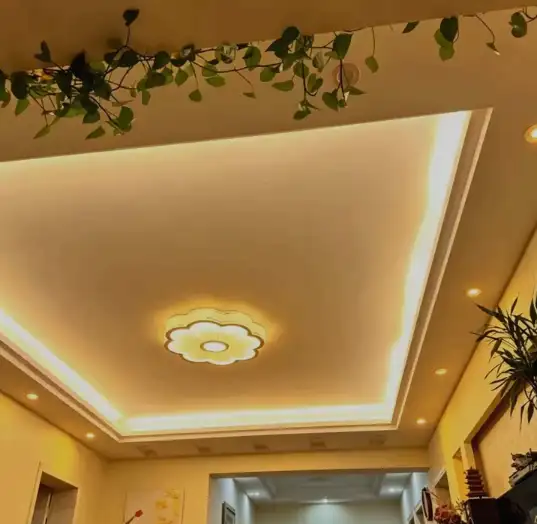
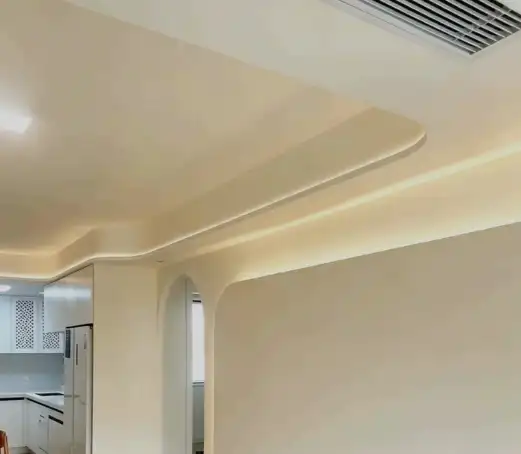
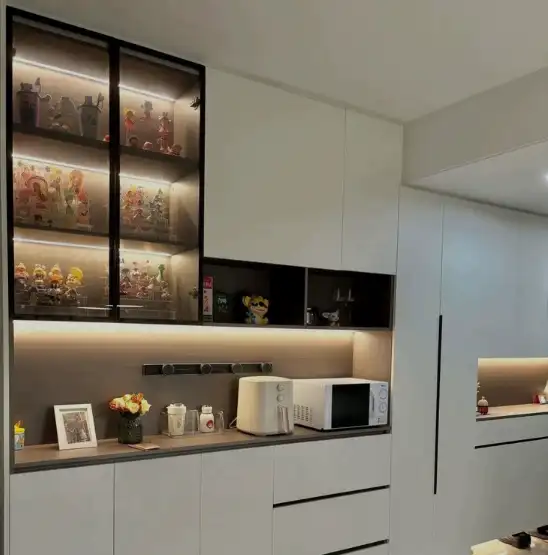
Recommended: COB 320/480, CCT tunable 2700K-4000K. Clean lines for floating ceiling coves, stairway handrails, and kitchen under-cabinet lighting.
How to Identify COB LED Strip Types
COB strips are harder to identify visually than SMD strips because the phosphor coating covers all the internal components. Here are four reliable methods to tell them apart.
Method 1: Check the Solder Pad Labels (Most Reliable)
Every COB strip has labeled solder pads at each cut point — the markings follow the same standard as SMD strips:
Single Color COB
2 pads, 2 traces on the back. The most common type — pure white or single-color output.
Dual White (CCT) COB
3 pads, 3 traces. Warm and cool white dies alternate under the phosphor. Adjust mix for 2700K–6500K.
RGB COB
4 pads, 4 traces. Red, green, and blue dies arranged under a clear or lightly diffused encapsulant.
Addressable COB
3 pads with DATA line. The giveaway: black IC chips visible under the phosphor at regular intervals. Learn more
Method 2: Flip It Over — Count the Traces
Since the top of a COB strip is fully covered by the phosphor layer, flipping the strip over and counting the copper traces on the back is the most practical identification method:
← Swipe left to see full table →
| Traces on Back | Strip Type |
|---|---|
| 2 traces | Single color |
| 3 traces | Dual white (CCT) — or Addressable (check for DIN label) |
| 4 traces | RGB |
Method 3: Look Through the Phosphor Layer
← Swipe left to see full table →
| What You See | Type |
|---|---|
| Uniform, identical dies under consistent phosphor | Single color |
| Two alternating die shades under the phosphor (subtle) | Dual white (CCT) |
| Tiny red, green, and blue dies in repeating pattern | RGB COB |
| Regular dark/black squares spaced between dies | Addressable COB — the black squares are IC chips, unique to this type |
Method 4: Board Width as Supporting Clue
← Swipe left to see full table →
| Type | Typical Width |
|---|---|
| Single color | 5mm – 8mm |
| Dual white (CCT) | 8mm – 10mm |
| RGB | 10mm – 12mm |
| Addressable | 10mm – 12mm |
Board width alone is not definitive, but combined with trace count it narrows identification quickly.
Easiest Tell for Addressable COB: If you see regularly-spaced black rectangular components under the phosphor coating — those are IC driver chips. No other COB type has these. It's the single most distinctive visual feature.
Need Help Choosing the Right COB Strip?
Send us your project requirements — our team will recommend the ideal COB solution and provide a competitive quote within 24 hours.
Get a Free Quote →