
Shenzhen LED Strip Factory · Architectural Facades
Architectural Lighting: Facade, Outline and Linear LED Strip Systems
Exterior lighting is judged from across a street at night, in the rain, ten years after handover. Specified around the joint detail, the sealed build and the control protocol rather than the tape — made in our own factory and supplied direct to contractors, facade engineers and lighting designers.
- Scope
- Outline to mediasix facade elements
- Builds
- IP65 · IP67sealed at manufacture
- Control
- DMX · pixel · staticaddressable per section
- Made here
- Neon · COB · pixelone supply chain
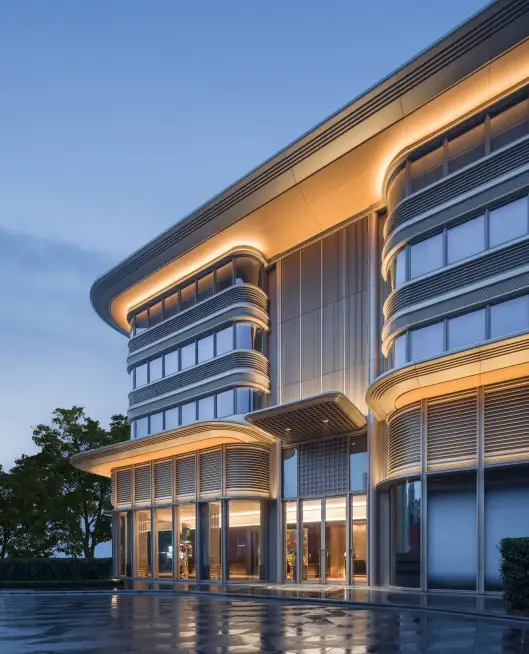
Facade realities
Why facade lighting fails, and it is rarely the tape
An exterior run is the least accessible lighting on a building and the most exposed. These are the failures we are called in to replace, almost all decided at specification.
Failure at the joint, not mid-length
Cut ends, junctions and gland entries are where water gets in. A strip sealed on site with silicone survives one winter; a factory-sealed length with gasketed joints is another product.
Replacement needs a cherry picker
At twelve metres a dead section is not a maintenance ticket but a road closure. Run length, sectioning and driver position decide whether a fault is a nuisance or a project.
Visible bin variation along a run
A facade shows every mismatch because the eye compares adjacent bays. Reels from different batches on one elevation read as two different whites once it is dark.
The far end dimmer than the near end
Long exterior runs fed from one end fade along their length. It looks like a faulty strip but is a power injection and cable sizing decision nobody made.
Glare into windows and the sky
Uplighting a facade throws light into the flats above and past the parapet. Planning conditions and residents both catch this after handover rather than before.
Yellowing and drift by year three
South elevations bake, and cheap silicone or PVC chalks and yellows under UV. The strip is still lit while its colour has moved away from the rest of the building.
Where water actually gets in
- 1Silicone brushed over a cut end on a scaffold is the most common exterior failure: it lasts a season, then water follows the copper.
- 2A factory end cap with a gasketed connector makes the joint a sealed component in its own right.
What links all six: the facade was specified as a length of tape rather than as a detail. Sealed build, joint method, sectioning, power injection, aiming and fixing are the specification on an exterior job, and the strip itself is the easy part.
Element by element
Six facade elements, six different specifications
A building is not lit as one surface. Each element sets out what it has to do at night, and what that fixes about the build, the control and the fixing detail.
Building outline, crown and parapet
The outline states the form of the building from distance, so it is drawn rather than lit: a continuous line with no dark gaps at corners and no visible joints. Flexible neon suits this: the body bends around a return and holds the radius without a channel.
The crown is also the least accessible run on the job. Section it so one fault does not take the whole silhouette out, and resolve the driver position inside the parapet at drawing stage. See architectural outdoor lighting.
Typical: single colour or RGB neon flex · 24V for long outlines · IP67 · UV-stable silicone body · sectioned runs, driver inside the parapet, gasketed joints at every corner
Floor lines, reveals and linear runs
Horizontal lines give a facade its scale, and they are unforgiving: the eye compares one bay against the next, so bin variation, dimming mismatch and voltage drop along the run are all visible from the street.
That makes batching and power injection the specification, not brightness: order one elevation as one batch, and feed long runs from both ends or mid-point. Architectural linear LED lighting covers the detailing.
Typical: 3000K warm white or RGBW · CRI 80+ · 24V · IP67 in a sealed aluminium profile · one batch per elevation, power injected each end, run length checked against drop
Media facades and pixel elevations
Where an elevation carries content — gradients, sweeps, low-resolution video — every segment is addressed individually and the facade becomes a low-density screen. Pixel pitch is set by viewing distance, not by what looks good on a bench.
Commissioning is the risk, not the hardware: mapping, universe count and a controller someone can operate after handover. Decide the protocol before ordering, because it changes the strip.
Typical: addressable RGB or RGBIC · pitch set by viewing distance · 12V or 24V · IP67 · DMX or pixel protocol fixed at design stage, mapping and universe count agreed before order
Signage, channel letters and lettering
Building identification is read at the same time as the facade, so it has to sit in the same colour family or it fights the scheme. Neon flex is now the normal build for channel letters and returns because it fills a letterform evenly with no hot spots.
Fabrication decides the result: backing, cut ends and cable exit are set on drawing, not improvised at the sign shop. Options are on the LED neon flex page.
Typical: single colour or RGB neon flex · 12V for letters, 24V for long returns · IP67 street-facing · 6–12 mm body · backing, end caps and cable exit set at drawing
Soffits, colonnades and entrance canopies
At ground level people stand directly under the light, so this is the one exterior element judged close up. Colour rendering and glare matter here in a way they do not at parapet level, and the source has to be out of the sightline.
It is also semi-exposed rather than dry: wind-driven rain reaches a soffit and the cleaning regime hoses it. Specify a sealed build even though it is technically under cover. Approach and levels are in the architectural lighting design guide.
Typical: 3000K warm white · CRI 90+ at eye level · 24V · IP65 under cover, IP67 at exposed edges · deep reveal or louvre so the source is not seen from the approach
Podium, landscape edges and steps
Where the building meets the ground the lighting stops being decoration and starts being circulation: step nosings, wall bases, planter edges and ramp handrails. Levels are low and aiming is downward, because anything pointed up at eye height blinds people arriving.
This is the harshest zone for water and damage — irrigation, ground water, snow clearing, foot traffic. Detail for planting and hardscape edges is in architectural landscape lighting, and the wider public-realm scope sits with landscape and park lighting.
Typical: 2700–3000K warm white, or RGB for feature walls · 24V · IP67 minimum, IP68 where buried or irrigated · downward aiming, sealed lengths, accessible driver enclosure
Technology selection
Which LED technology suits which facade element
Four technologies cover an exterior scheme, and the choice follows the element rather than the price per metre. LED neon flex is the default for anything shaped or street-facing — outlines, returns, lettering — because the body is diffuser and seal in one and bends around a corner without a channel. Addressable LED strip is what makes a media facade possible, where each segment carries different content.
COB LED strip earns its place at ground level — soffits, colonnades, entrances — because a dotless line is the only thing that survives being seen from two metres away. SMD LED strip remains the sensible choice for concealed cove and reveal runs where output per pound matters and the source is never in view.
For every exterior element, the sealed build is specified at manufacture rather than sealed on site, and a full set of waterproof COB strip options is available where a dotless line has to survive weather.
Matched products from the catalogue
PVC LED Neon Strip 6/8mm 120LEDs/m Outdoor
ES-NEON-SIGN-03
The outline product: a rigid-enough PVC body that holds a bend, in an IP67 build made for permanent street-facing exposure.
- Density120 LEDs/m
- Body6 / 8 mm
- Voltage12V
- IPIP67
Smart Addressable Pixel LED Neon Strip RGBIC
ES-NEON-PIXEL-01
Pixel content in a sealed neon body, so a media elevation or a bridge run can carry gradients and sweeps without a separate channel and diffuser.
- TypeRGBIC
- ControlAddressable
- Voltage12V / 24V
- IPIP67
COB LED Strip 528LEDs/m 10mm 24V Single Color
ES-COB-528-10MM-24V
The dotless line for anything seen close up — canopy soffits, colonnades, entrance reveals — at 24V so a run can cross an elevation.
- Density528 LEDs/m
- Width10 mm
- Voltage24V
- CRI · IP90 · IP20
WS2811 Addressable RGB LED Strip 60LEDs/m 10mm
ES-WS2811-60-12V
A standard pixel protocol most controllers already speak, for elevations and structures that have to run authored content rather than one colour.
- Density60 LEDs/m
- Width10 mm
- Voltage12V
- ProtocolWS2811
Facade projects
Facade, bridge and signage projects already installed
Eight exterior installations across outline, media facade, bridge, signage and gallery work, with locations as recorded in our project files.
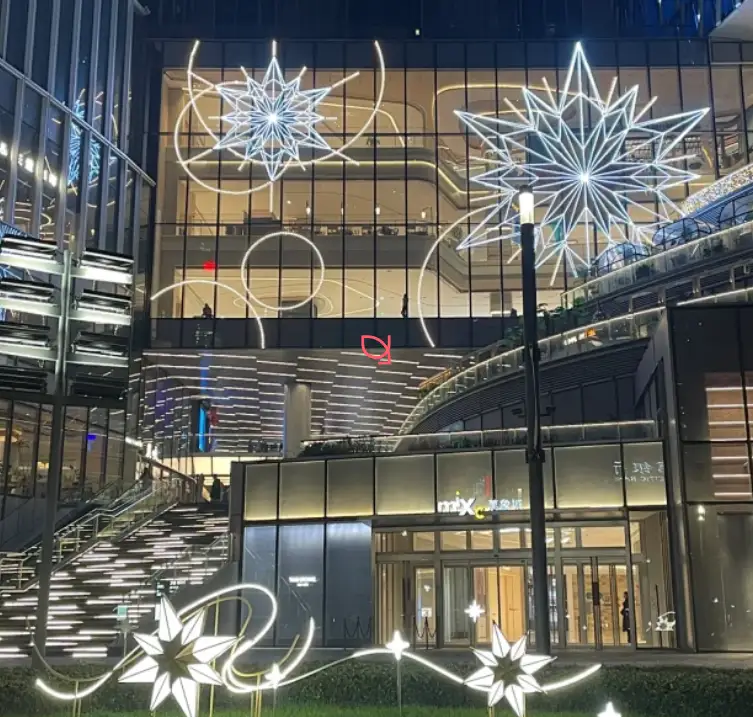
Lyon, FranceFacade outline
Building facade outline LED neon flex lighting
The building silhouette drawn in neon flex, sectioned so a single fault does not take out the whole outline.
Read the project
Trondheim, NorwayMedia facade
Media facade addressable LED strip lighting
An elevation addressed as a low-resolution grid, with pixel pitch set by the viewing distance from the opposite side of the street.
Read the project
Gothenburg, SwedenCrown
Architectural crown waterproof LED strip lighting
A crown run at the least accessible point on the building, with sealed lengths and the driver resolved inside the parapet.
Read the project
Riyadh, Saudi ArabiaBridge
Addressable neon flex bridge at KAFD
A structural run in sealed pixel neon, specified for high ambient temperature and continuous outdoor exposure.
Read the projectOstrava, Czech RepublicBridge
Bridge RGB pixel neon flex lighting
Colour scenes across a span, sectioned so the structure can be lit as a whole or in parts on a timetable.
Read the project
Bristol, UKSignage
Channel letter LED neon flex signage
Letters filled evenly with neon flex, with backing, cut ends and cable exit set out before fabrication started.
Read the project
Ganzhou, ChinaHeritage
Outdoor neon flex on a heritage building
Outline lighting on a protected structure, where fixing points and cable routes were constrained by the existing fabric.
Read the project
Bologna, ItalyMuseum
Museum gallery high CRI linear LED strip lighting
Continuous linear runs at high colour rendering, where the lighting had to disappear and the exhibits had to read correctly.
Read the projectFurther installations are in the project case library. The full exterior scope, including how these schemes are put together, is set out in architectural LED lighting solutions.
Specification guide
Recommended specification by facade element
A starting point for a schedule, not a substitute for one. Final values depend on mounting height, viewing distance, exposure and the planning conditions on the elevation.
| Element | Colour | CCT | CRI | Voltage | IP | Control | Detail |
|---|---|---|---|---|---|---|---|
| Outline, crown and parapet | Single colour or RGB | 3000K | 80+ | 24V | IP67 | Static or scene | Outdoor neon flex |
| Floor lines and linear runs | Warm white or RGBW | 3000K | 80–90 | 24V | IP67 in profile | Dim or scene | Waterproof COB |
| Media facade and pixel | Addressable RGB · RGBIC | — | — | 12V / 24V | IP67 | DMX or pixel | Waterproof addressable |
| Signage and lettering | Single colour or RGB | — | — | 12V / 24V | IP67 | Static or scene | LED neon signage |
| Soffit, podium and landscape | Warm white | 2700–3000K | 90+ | 24V | IP65 covered · IP67 exposed | Dim to 1% | Dotless COB |
- IP is a build, not a coating. A sealed strip is manufactured that way. Sealing an indoor tape on site with silicone will pass a handover inspection and fail in the second winter, because the water gets in at the cut end, the junction and the gland rather than through the tape.
- Order one elevation as one batch. The eye compares adjacent bays, so bin variation that is invisible on a bench is obvious across a facade. State the elevation lengths at enquiry so a run can be produced together rather than assembled from stock reels.
- Decide the protocol before the strip. DMX, pixel or a plain switched circuit changes the driver, the sectioning and sometimes the strip itself. Retrofitting control onto an exterior run means going back up the building, which is the expensive part.
Procurement and factory support
Buying facade LED lighting from the factory direct
Senfey manufactures in Shenzhen and supplies contractors, facade engineers, sign makers and lighting designers rather than retail, so a question about a sealed build or a joint detail is answered by the people running the line.
- Send the elevations, or just the lengths
- Elevation drawings, run lengths, mounting heights and exposure per element are enough to start. Section details let us comment on the joint detail.
- Fix the sealed build and the joint method
- IP rating, cut-end treatment, junction type and gland entry are the exterior specification, decided at order because they are built in, not added later.
- Resolve driver position and access
- Where the driver sits decides whether a future fault is a maintenance visit or a platform hire. Fix it on drawing while parapet and soffit are still open.
- Check run length against voltage drop
- Tell us the longest continuous run and how it is fed. Power injection and cable sizing are cheaper to design than a visibly dimmer far end is to fix.
- One batch per elevation
- Once the schedule is fixed, an elevation is produced against one specification and one batch so adjacent bays match. Tell us the phasing if the facade is handed over in stages.
- OEM, ODM and certification for the market
- Cut-to-length runs, custom colour and CRI, IP65 to IP67 builds, connector and lead configurations, private labelling. Raise the destination market early, since certification can affect the driver: about Senfey.
Facade project enquiry
Tell us the elements and we reply with a strip, driver, sealed build and IP rating per element, not one price per metre. Prefer email? Use the contact page.
Prefer email or a message app? Use our contact page.
FAQ
Facade lighting questions from designers and contractors
The questions that come up most often while a facade scheme is being specified and priced.
What IP rating does a facade run need?
IP65 is acceptable only where the run sits under a soffit or a deep reveal that keeps rain off it. Anything on an open elevation, a parapet or a horizontal ledge should be IP67, because water sits on a horizontal surface rather than running off it.
More detail on build and exposure sits in architectural outdoor lighting.
Why do exterior runs fail at the joint rather than in the middle?
Because the tape body is sealed at manufacture and the joint is not. Water gets in at the cut end, the solder point and the cable gland, then travels along the copper until a section goes dark.
Fix the joint method before the strip: factory-terminated leads, moulded end caps and glands sized to the cable, rather than a bead of silicone applied at height.
How do you avoid visible colour variation across an elevation?
Order the elevation as one production batch and state the run lengths at enquiry. Bin variation that is invisible on a bench becomes obvious once two bays sit side by side at night.
Reels pulled from different stock lots will not match, and a facade is the one place where the eye has a reference line to compare against.
How long can one run be before voltage drop shows?
At 24V a single-feed run of roughly five metres is safe; beyond that the far end reads dimmer and slightly warmer. The answer is power injection at planned intervals, not a longer cable.
Feed positions have to be agreed with the driver locations while access is still available. Architectural linear LED lighting covers sectioning on long horizontal runs.
Do I need addressable strip for a media facade?
Only if segments of one run must show different content at the same time — gradients, sweeps, pixel graphics. If the elevation changes as a whole, a scene-controlled single-colour or RGB run is cheaper, simpler and more reliable.
Decide this before the strip is chosen, because the protocol determines the driver, the data topology and often the strip itself.
Can LED neon flex form channel letters and lettering?
Yes, and that is its strongest use. The body bends on one axis while holding its shape, so it follows a letter form or a curved return without a channel and diffuser.
Specify the sealed outdoor build for anything street-facing, and confirm the minimum bend radius against the tightest curve in the artwork before the pattern is cut.
How is light spill into apartments and the sky controlled?
With aiming and shielding rather than dimming. A recessed run behind a shadow gap, a profile with a baffle, or a fixture set back into a reveal keeps the light on the building and off the glazing above it.
Curfew scenes handle the rest. Architectural lighting design sets out how spill and curfew conditions are usually worded on consent.
Do you supply contractors, sign makers and designers directly?
Yes. We manufacture in Shenzhen and supply main contractors, sign makers, lighting designers and distributors, including OEM and private-label work.
Tell us the destination market at enquiry — facade drivers often need market-specific approvals. Send the elevations through the facade project enquiry form for a specification per element rather than one price per metre.
Not covered here? Questions that need drawings — reveal depth, mounting height, driver position, control topology, access after handover — are faster to answer against the elevation.
Request a quote