Product Overview
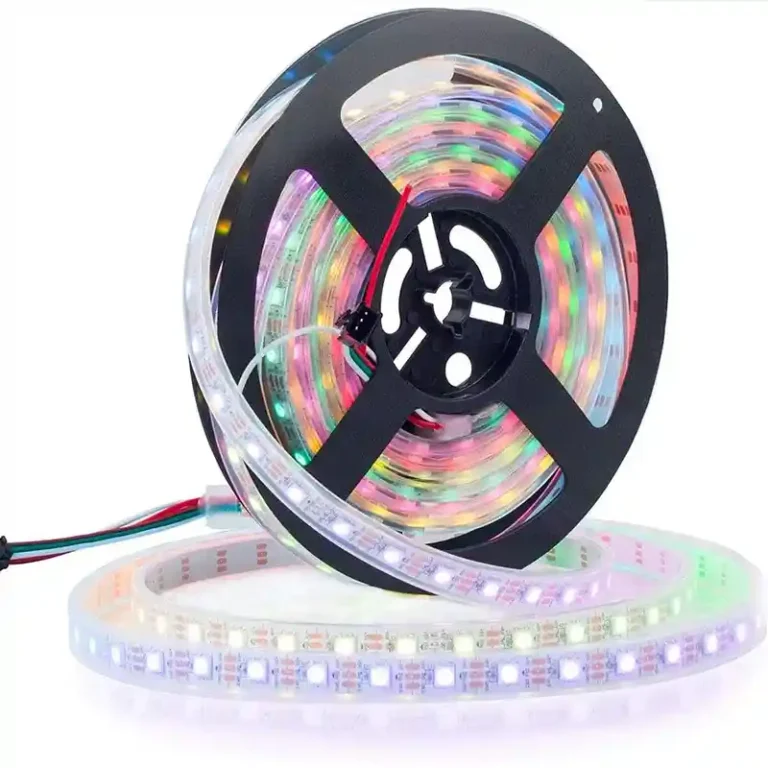
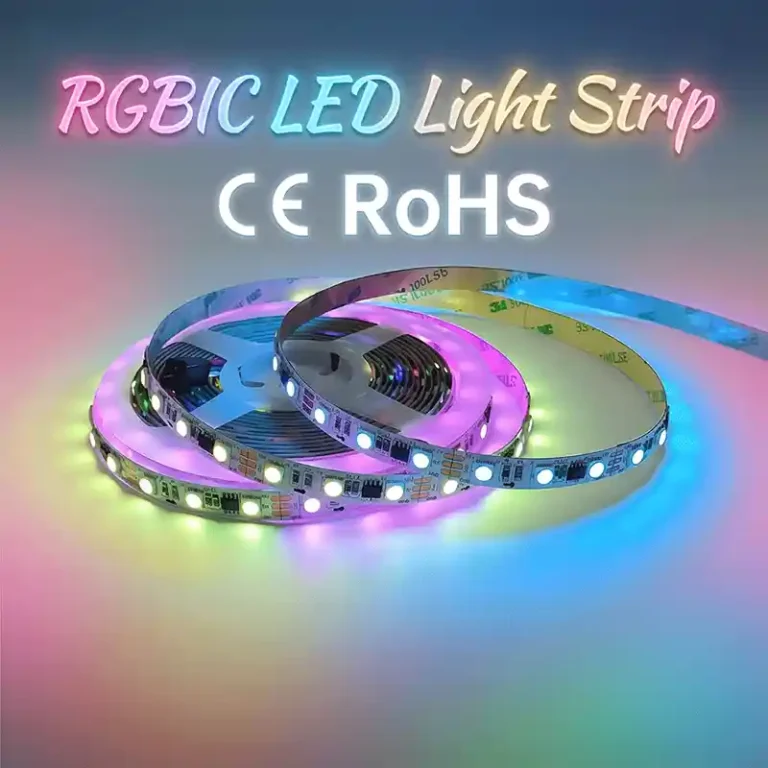
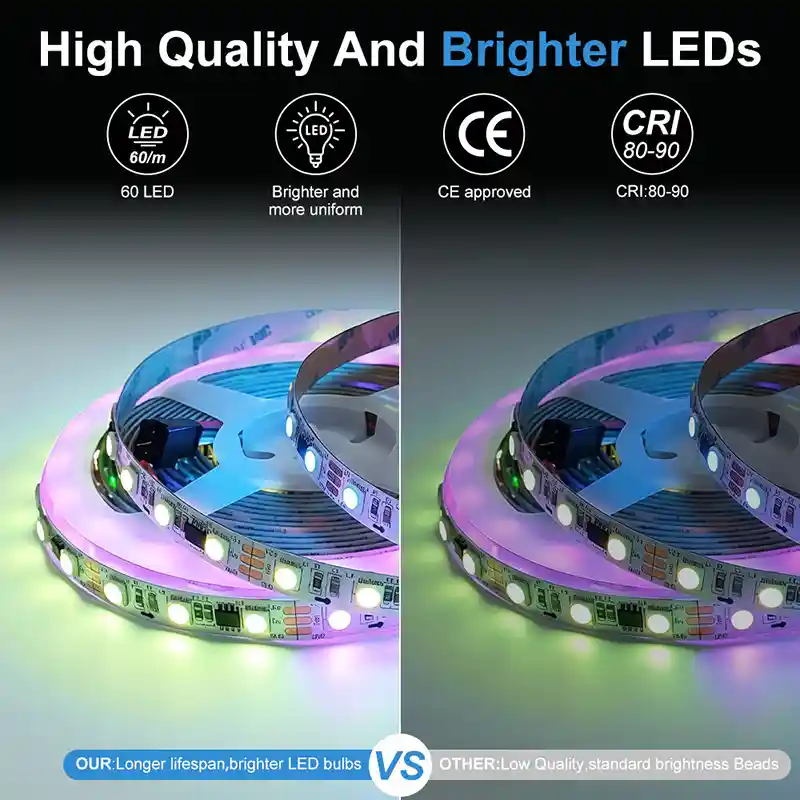
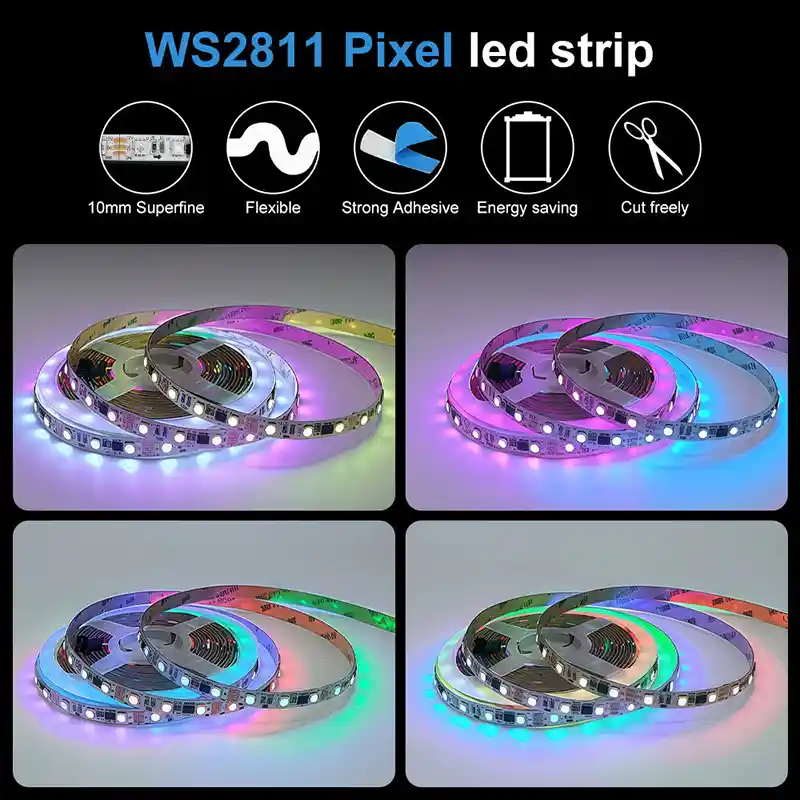
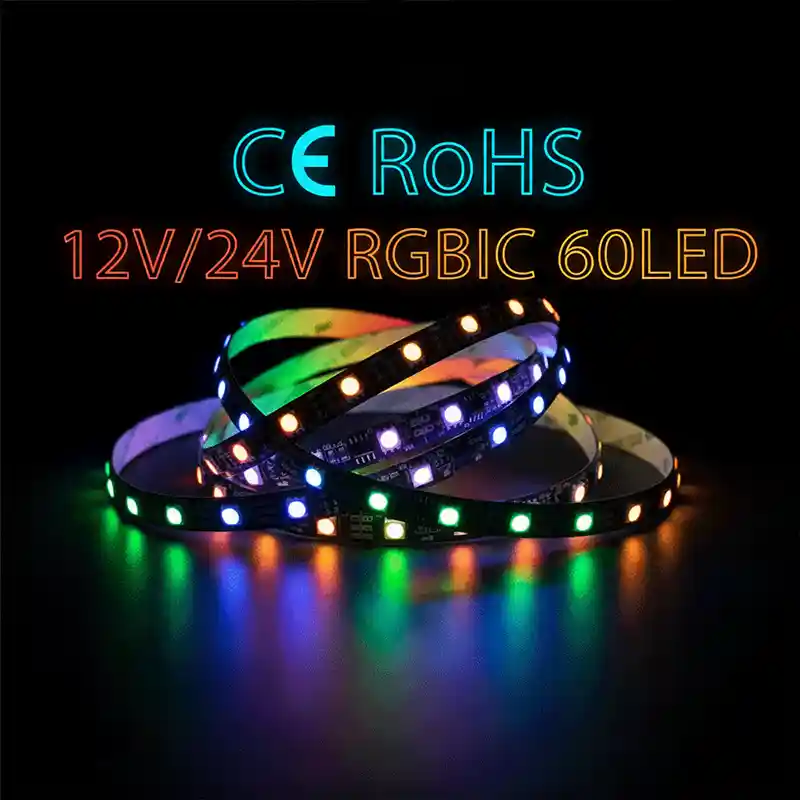
The Senfey ES-WS2811-60-12V is the higher-density 12V WS2811 LED strip in our addressable range. Each driver IC governs a group of three 5050 RGB emitters, so a metre resolves to 20 independently controllable pixels rather than 60. That grouping is the trade you are making: half the pixel resolution of a per-emitter strip, in exchange for a 12V bus that carries current further with far less voltage drop and fewer injection points. Emitter spacing is close enough that a chase reads as one moving band at normal interior viewing distance instead of a row of separate lamps, which is where the lower-density signage variant starts to break down.
Best For — Which Projects This Fits
Restaurant, bar, and club feature lighting. Pixel-mapped chases and gradients behind bars, above banquettes, and along ceiling coves seen from 1–3 m. Twenty pixels per metre keeps the animation continuous at that distance, as in our RGB restaurant and bar lighting project.
Retail fixtures and shop-front animation. Highlight sweeps, brand-colour chases behind glass, and seasonal programmes, all on the same 12V power and controller ecosystem your installers already work with. See our retail display lighting project.
Runs too long for a 5V pixel bus. This is the practical reason most specifiers land here. Where a 5V strip needs a feed every 4–5 m, 12V lets you cover a bar front or a shop perimeter with a fraction of the injection hardware and cable, which usually decides the layout on a fit-out.
Standard SPI control. The strip takes ordinary single-wire WS2811 data, so it works with mainstream standalone pixel controllers, Wi-Fi controllers, and SPI-to-DMX bridges. Our SP110E pixel controller drives it directly. For sizing and protocol notes, see our individually addressable LED strip guide.
Not For — When to Ask Us for a Different SKU
Do not specify it where the effect needs one pixel per emitter. Three-LED grouping sets the floor on detail, so video mapping and fine gradients viewed at arm’s length will show the block structure. Use our WS2812B 60 LEDs/m 5V for that work.
Plan the data topology before you commit. Pixel data passes through every IC in the chain, so a failed IC takes out that pixel and everything downstream of it, not just itself. On built-in joinery that cannot be reopened after handover, tell us the run layout and we will break it into separately fed segments so one fault cannot dark an entire fixture.
For long facade or outline runs read from across a street, the sparser WS2811 30 LEDs/m 12V resolves identically at that distance and halves the pixel count your controller has to carry.
If the fixture is an open cove with no diffuser, no discrete-emitter strip will read as a clean line. Move to an addressable RGBIC COB strip. Unsleeved boards also rule out wet or exterior positions; send us the environment and we will scope a sealed build.
Customization & Inquiry
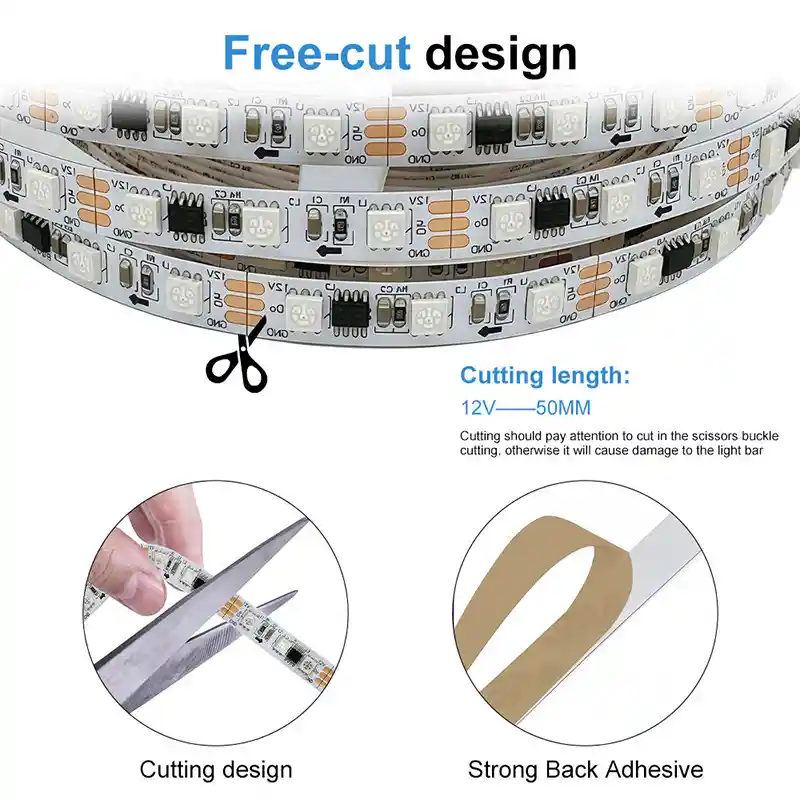
Pixel budget, longest single run, and controller channel capacity are the three numbers that decide whether an addressable layout works, so we check them before anything else. We adjust cut and reel length, PCB colour, tail-wire length, and pre-soldered signal and power connectors, and can supply fixture-length pieces with joints already made so site crews are not cutting and resoldering pixel strip on a ladder.
Send us:
- Total metres, expected pixel count, and the longest continuous run per feed
- Intended power-injection points and supply capacity in amps at each feed
- Controller or node in use, and the show software driving it
- Whether pieces must arrive pre-cut with connectors soldered
- Installation environment and any sealing requirement
Send Us Your Project Brief and a sales engineer will confirm pixel budget, injection plan, supply sizing, and controller compatibility.