What the Cabinet Maker Actually Asked For
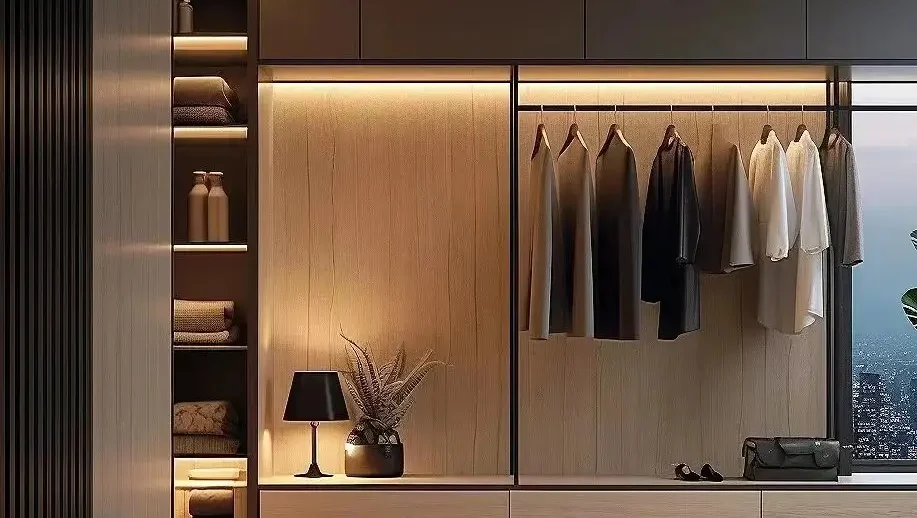
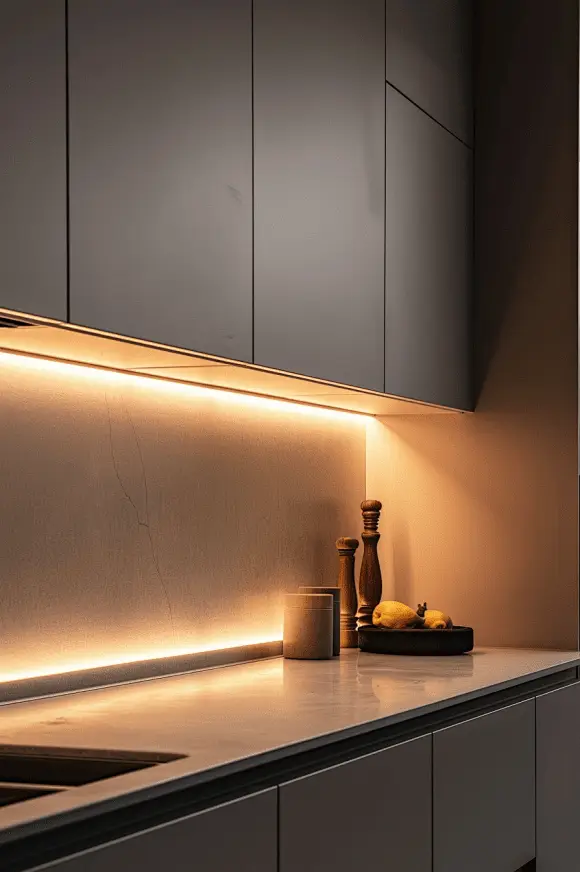
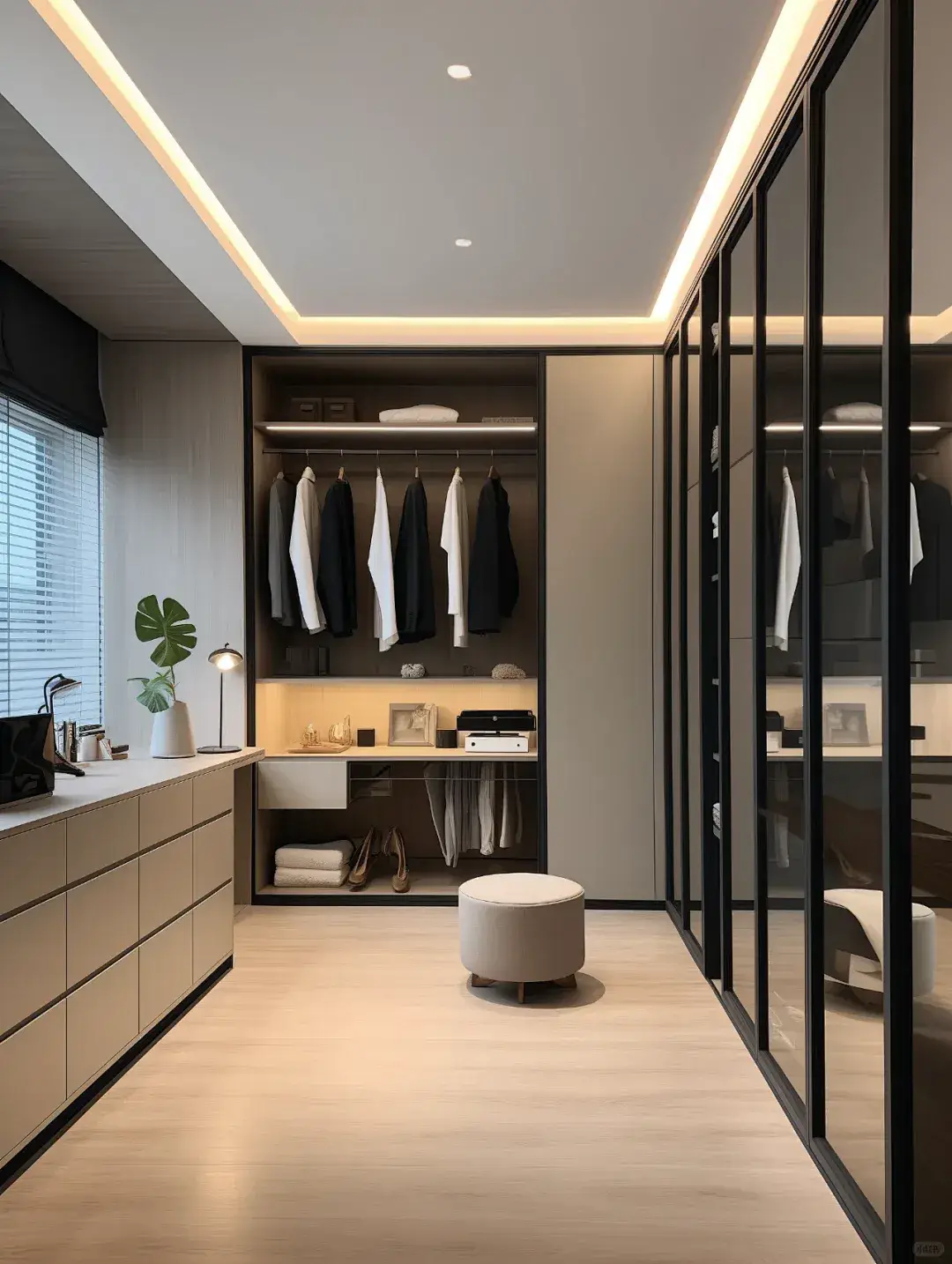
This cabinet cob led strip lighting project started with a cabinet maker in Porto, Portugal who was tired of visible LED dots showing through the diffusers on his kitchen and wardrobe deliveries. Clients kept flagging the same two complaints at handover: dotting inside pull-out drawers at close range, and warm-to-cool color drift between adjacent groove runs on one wall. He asked Senfey for a narrow, cuttable, dotless platform he could standardize across all his joinery — kitchen wall units, walk-in wardrobes, media walls and display shelving.
Because his shop bills roughly 30–40 residential projects a year, consistency mattered more than any showpiece finish. Four requirements came out of the first meeting:
- Dotless emission at hand distance. Drawer interiors are seen from 200–300 mm, so any pixelation shows immediately. COB was mandatory wherever the strip is visible.
- Fit the standard 10 mm routed groove. The CNC library was already built around a 10 mm × 10 mm groove, so an 8 mm PCB was the widest that would seat.
- Land on usable cut lengths. Custom cabinet lengths rarely fall on cut marks; the shortest run on the books was a 340 mm spice-drawer bay.
- One CRI 90 bin at one CCT wherever the strip is visible. No color drift between groove runs on the same wall.
One note on light levels: EN 12464-1 governs indoor work places, not homes, so it does not formally apply to residential joinery. The shop uses its task-lighting categories as a working floor for worktop levels anyway — reasonable practice, provided nobody writes it into a submittal as compliance.
Three Strips for Three Groove Jobs
Approx. 120 meters were supplied across five sample projects in the first quarter. Allocation kept the stock list deliberately tight — three strip references, one driver family, one profile family.
| Use case | Model | Spec | Approx. Length | Why this SKU |
|---|---|---|---|---|
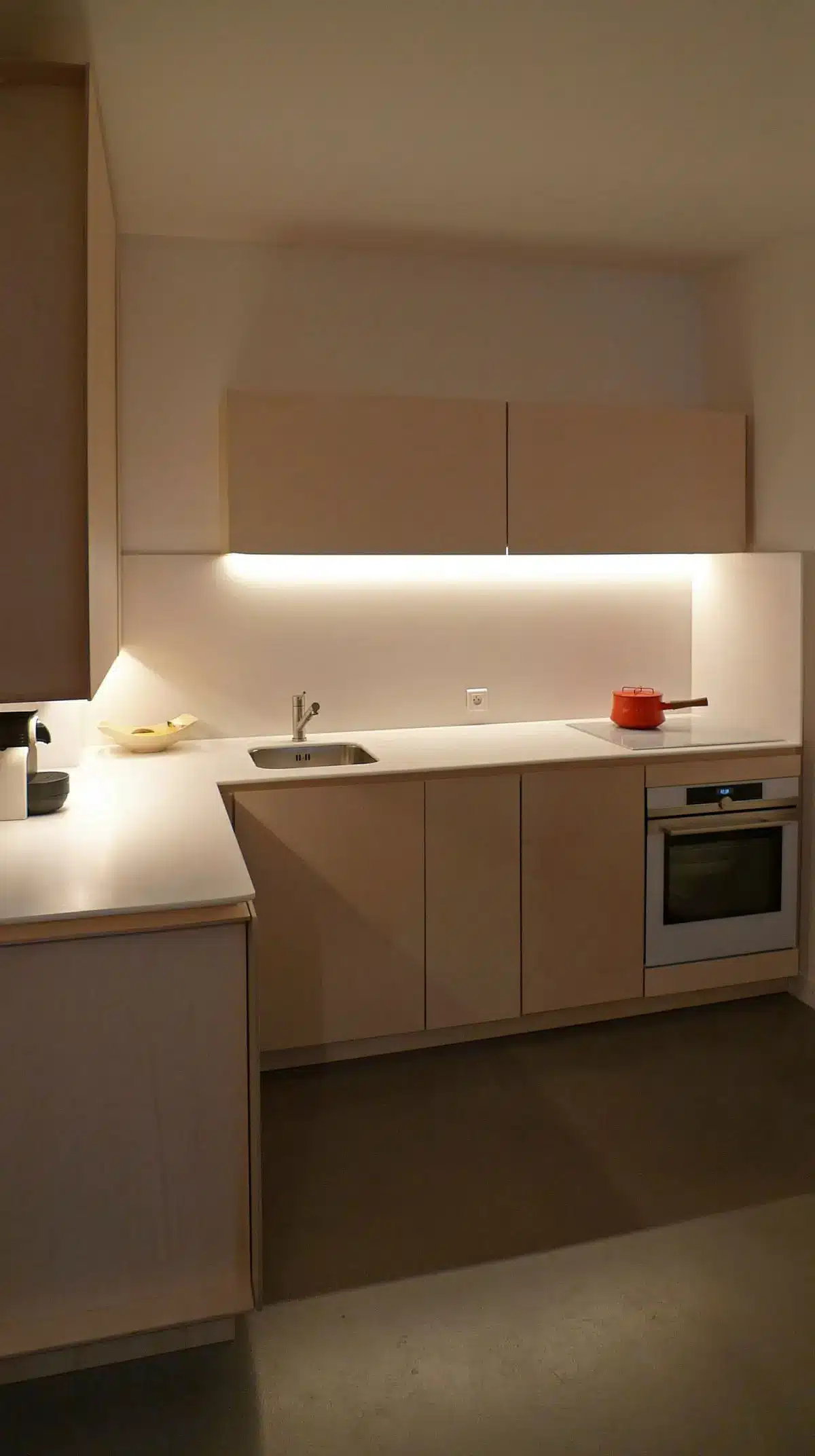
| Wardrobe rails, kitchen wall unit under-shelf, drawer interiors | the 320 LEDs/m 8mm reference | COB · 320 LEDs/m · 8 mm · 12V/24V · IP20 · CRI 90 · 3000K | Approx. 45 m | 8 mm width seats in the standard 10 mm groove; run at 12V here, which halves the cut interval and matters in short furniture bays. |
| Longer media-wall grooves & open display shelving | the 480 LEDs/m 8mm reference | COB · 480 LEDs/m · 8 mm · 12V/24V · IP20 · CRI 90 · 3000K | Approx. 40 m | Higher density for a fully dotless read behind a diffuser; run at 24V so the 4–6 m media-wall lengths hold voltage end to end. |
| Cost-sensitive interior groove (behind opaque panels) | ES-2835-120-8MM | SMD 2835 · 120 LEDs/m · 8 mm · 12V/24V · IP20 · CRI 80 · 3000K | Approx. 35 m | Where the strip is never directly visible, SMD 2835 at CRI 80 saves budget with no perceived penalty. |
| Accessories | 12V and 24V constant-voltage drivers · recessed aluminum profile · frosted PC diffuser · ES-LC-DIM-005 touch dimmer for wardrobe circuits · 2-pin DC pigtail leads | |||
Both COB references share one 3000K bin, ordered on a single PO to hold batch consistency — the practical version of the one-CCT rule in our home-decor cluster. One honest gap: the shop wanted door-triggered switching on wardrobe circuits, and we do not supply door sensors — the electrician sourced those locally and wired them ahead of our dimmer.
Why Voltage Decides Your Cut Length
The detail that caught the assembly team out has nothing to do with strip type and everything to do with voltage. Cut interval is set by how many LEDs sit in one series segment, so the same reel cuts every 25 mm on 12V and every 50 mm on 24V. Datasheets quote one figure; the shop floor needs both. Full method in how to cut a COB LED strip correctly.
The 340 mm spice-drawer bay makes the point. On 12V the nearest cut lands at 325 mm — 15 mm short, invisible behind the drawer face. On 24V it lands at 300 mm, leaving a 40 mm dark tail that reads as a fault. Nothing was wrong with either strip; the wrong voltage was chosen for the bay. Every furniture-scale run therefore went to 12V, and the shop added 25 mm snap points to its CAD library so bay lengths land on cut marks by default.
Two other notes from the same batch. Groove routing: an 8 mm strip glued straight into a 10 mm groove leaves about 1 mm each side and works fine, but adding a profile and diffuser needs the groove widened to 12 mm — the profile walls consume the clearance, and the first sample cabinet was routed at 10 mm before anyone caught it. Wiring: every carcase is pigtailed with an 18AWG DC lead at the back panel, so drivers can be relocated without cutting into finished joinery. All zones are IP20 dry interiors under IEC 60529, and the supplies sit in the SELV band, inside the protective-measure class described in IEC 61140.
What Changed After the Joinery Shop Standardized
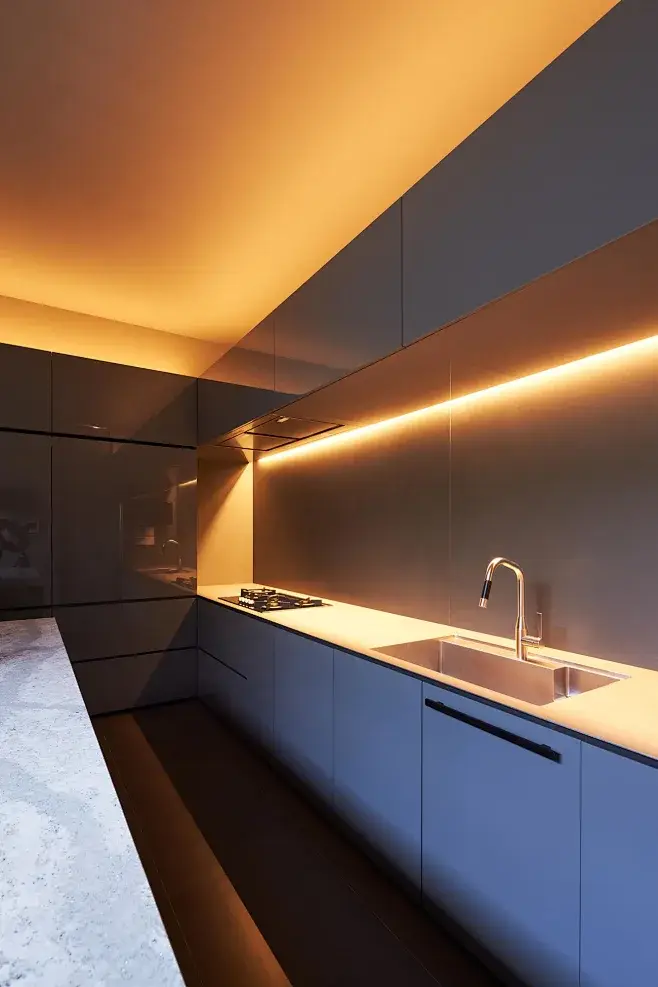
After the first quarter on this cabinet cob led strip lighting package the shop reported three changes. Rework calls for visible dots inside drawers went to zero across the five delivered projects. Color drift between adjacent groove runs stopped once every visible run came from one 3000K bin on one PO. And per-cabinet fitting time dropped, because every reference now shares the same 8 mm width and the same profile — no hunting for the right cut mark.
If You’re Standardizing Your Joinery Lighting
- Pick voltage from your shortest bay, not your longest run. 12V gives 25 mm cut granularity; 24V gives 50 mm.
- Route 10 mm for direct-glue, 12 mm if you want a profile. An 8 mm strip plus profile walls will not fit a 10 mm groove.
- Use COB only where it is seen. Behind opaque panels, SMD 2835 at CRI 80 saves cost with no visible penalty.
- Lock one CCT and one CRI on a single PO. Batch consistency, not spec sheets, is what eliminates drift between grooves.
- Pigtail every cabinet. A DC lead at the back panel lets the electrician move drivers without touching finished joinery.
Standardizing a similar package across your joinery? Send us your groove drawings and we’ll draft a matched COB/SMD list against your cabinet library, with the cut marks worked out per voltage.
About Senfey
Senfey is a Chinese LED strip manufacturer founded in 2010, running a Shenzhen factory of roughly 12,000 m² with a monthly output above 250,000 meters. Our catalog covers COB, SMD, LED Neon Flex, addressable strips, controllers and power supplies. Browse Senfey’s COB LED strip catalog for joinery-ready 8 mm and 10 mm references.