
Screening a cob led strip manufacturer is difficult because almost every supplier answers the standard questions the same way. Everyone runs an aging test, everyone has quality control, everyone can do OEM. Those answers separate nobody. What separates suppliers is whether they can give specific figures for the things that actually vary between COB factories — and whether the reel you receive in month six matches the sample you approved in month one.
This guide covers the checks that produce different answers from different suppliers, written for importers, distributors, contractors, and lighting brands sourcing COB LED strip from China.
Define the Specification Before You Ask for Price
A request for “COB strip price” produces quotations that cannot be compared, because each supplier fills in the unstated variables with whatever makes their number look best. Copper weight, chip grade, phosphor quality, and tape grade are all invisible on a price list and all affect cost.
Send a requirement sheet instead: voltage, LEDs per metre, wattage per metre, colour temperature and its tolerance, CRI, PCB width, copper weight, IP rating, reel length, cut interval, packaging, and expected annual volume. Suppliers who quote against a fixed specification are quoting the same thing as each other. How those variables move the number is covered in the price structure guide.
Six Questions That Separate Suppliers
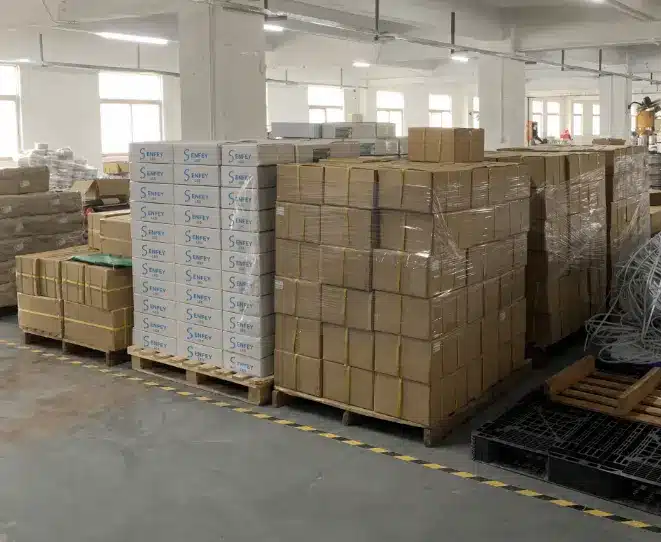
Each of these has a specific correct answer that a cob led strip manufacturer with real process control can give immediately, and that a reseller or a weak producer cannot.
1. Who makes the dies, and do you have LM-80 data for them?
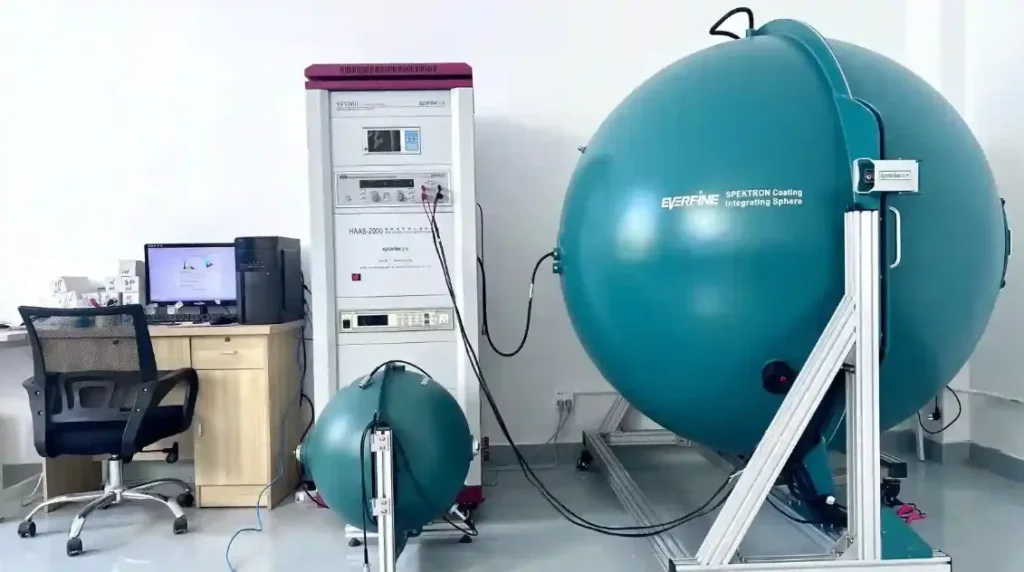
LM-80 is the standardised measurement of LED lumen maintenance over time, and it is produced by the chip maker rather than the strip assembler. A factory that will not name its die supplier cannot have LM-80 data for it, which means any lifetime figure in the catalogue is an estimate presented as a measurement. Ask for the chip brand and the LM-80 report, and note whether the answer changes between enquiries.
2. What is the copper weight of the FPC?
Copper weight — commonly 1 oz or 2 oz per square foot — determines how much voltage the board loses along its length and how well it spreads heat sideways. Heavier copper costs more and is one of the easiest places to cut a quotation without the buyer noticing. This is a number, so a producer answers it in seconds. A reseller usually has to go and ask.
3. How is the phosphor layer applied, and what is the tint variation along a reel?
This is the process risk unique to COB construction. The phosphor and silicone layer is coated across the whole strip in one operation, so coating thickness variation shows up as banding or tint drift along the run — and unlike a dotting problem, no profile or diffuser hides it. Ask how the coating is applied, whether a reel is coated in a single continuous pass, and what tint variation is accepted along one reel.
4. What SDCM figure do you hold, and to which bin?
Colour consistency is measured in MacAdam ellipse steps, or SDCM, within CIE colorimetry. Three steps is the normal expectation for quality commercial interiors; five is where two runs on the same wall start looking different. CRI does not imply this figure and neither does colour temperature — it has to be requested separately. On COB the risk is between reels rather than within one, since a phosphor mixing batch shifts a whole production run uniformly.
5. How many hours is the aging test, at what current, and on what sample rate?
“We do aging test” is not information. The useful answer is a number of hours, a drive current, and whether it is run on every reel or a sample per batch. Two hours at half current on one reel per thousand is a different process from a longer full-current burn-in on every reel, and both get described the same way in an email.
Bonus: what IP rating, tested to what?
Where a waterproof build is involved, an ingress rating only means something against IEC 60529 and only applies to the sealed assembly as supplied. Ask which specific test the figure comes from, and confirm that a cut end loses the rating until it is re-sealed. A supplier quoting an IP number without reference to the standard is quoting a marketing figure.
6. Which adhesive tape, by name and grade?
Adhesive failure is one of the most common site callbacks on strip installations, and tape grade is a real variable behind it. A named tape with a stated grade can be verified; “strong 3M tape” cannot, since that description covers products with very different performance on the substrates joinery actually presents.

Telling a Producer From a Reseller
Have an LED Lighting Project?
Share your project requirements — our engineering team will configure the complete LED strip system (strips + profiles + controllers + power supplies) and send you a detailed proposal within 24 hours.
Both can be legitimate, and a good trading company with a stable factory behind it beats a poor direct factory. But you need to know which one you are talking to, because it determines who can actually change a specification and who is relaying messages.
The reliable test is technical rather than documentary. Ask three specific production questions in one message — copper weight, cut interval in millimetres for a named model, and how the phosphor is coated. A production engineer answers all three directly. A reseller answers one, deflects one, and returns to the other later after asking someone else. That pattern is more informative than any certificate, because certificates can be forwarded and answers cannot.
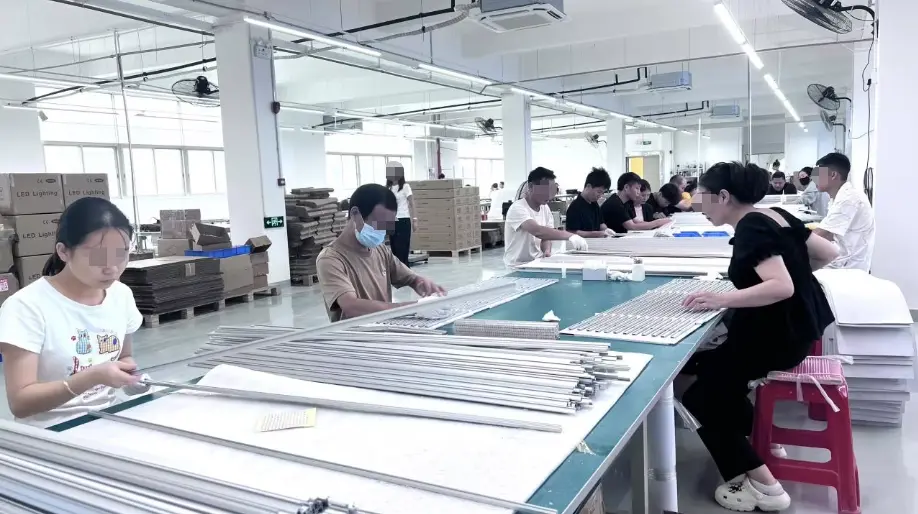
Two supporting checks: request a short video walk of the running line rather than a photo gallery, since photographs circulate freely between suppliers, and check whether the business licence scope covers manufacturing or only trade. Neither is conclusive alone, but together with the technical test the picture is usually clear.
The Sample Trap, and How to Avoid It
The most expensive failure in this process is not a bad sample. It is a good sample that production cannot reproduce. A hand-assembled sample built with the best available components, checked individually before shipping, tells you what the factory can make once — not what arrives on a pallet.
Three requests defeat this:
- Ask for a cut from a production reel, not a made-up sample. Specify that you want a length cut from finished stock, with the reel batch number recorded on the label.
- Ask for two reels from different production dates. If they match, the process is in control. If they do not, you have found the reel-to-reel consistency problem before it reaches a hotel corridor rather than after.
- Keep a labelled reference offcut. Store it with the batch number so a reorder in twelve months can be compared against what was actually installed, not against a memory of it.
Then test in project conditions rather than on a desk. Mount the sample in the profile the project will use, with the intended diffuser, driver, cable length, and viewing distance. A strip that looks smooth in the hand can show banding in a shallow channel, and a strip that is stable on one driver can flicker at low output on a different dimming protocol. Where controls are part of the scope, protocol compatibility should be settled at sample stage — the DALI Alliance documentation is a reasonable framework for those questions.
What to Inspect on the Sample Itself
- View the lit strip along its length at a shallow angle and at low output, where coating variation and tint drift become visible.
- Check the cut marks are printed accurately against the actual pad positions, not approximately.
- Flex the strip repeatedly at one point and look for damage to the emitting surface.
- Run it at full output in the intended profile for an hour, then check the case temperature.
- Measure the voltage at the far end of a full-length run under load.
- Confirm the reel label carries a batch or production code you can quote later.
Comparing Quotations on Equal Terms
Two strips with the same product name and a different price usually differ in items that never appear on the quotation.
| Item | Ask For | Why the Price Moves |
|---|---|---|
| Copper weight | 1 oz or 2 oz, stated | Sets voltage drop and lateral heat spreading |
| Die supplier and grade | Brand name, with LM-80 report | Usually the dominant cost variable in the strip |
| Colour consistency | SDCM step figure | Tighter binning means more material rejected |
| CRI | The value, and how it is verified | Higher CRI costs output and needs better phosphor |
| Adhesive | Tape name and grade | Determines whether it holds on real substrates |
| PCB width | 8, 10, 12 mm or custom | Must clear the profile with working tolerance |
| Packaging | Neutral, branded, carton and label spec | Matters for resale and for stock control |
Voltage sits slightly apart from these because it is a design decision rather than a cost lever: it changes driver selection, feed points, and cut interval, and the 24V planning guide covers how that affects run length. Where a broader product programme is involved, decide early whether you need a COB specialist or a supplier carrying both constructions — the COB and SMD comparison sets out which projects need which.
Repeat Orders: What Actually Has to Be Agreed
For distributors and phased projects, the supplier’s ability to repeat a specification matters more than the first order’s price. Agree these in writing before the first bulk shipment, because renegotiating them after a mismatch has no leverage behind it.
- The specification is locked to a written sheet, and any component substitution requires notice and re-approval.
- Reels are labelled with batch codes, and the codes are recorded per shipment.
- Where runs will be seen together, material comes from one production batch.
- Spare quantity for maintenance is bought from the original batch, not reordered later.
- Packaging, labelling, and carton marks are fixed to an approved artwork.
- An approved reference sample is held by both sides for future comparison.
The substitution clause is the one that gets skipped and the one that causes the disputes. A supplier who quietly changes die supplier between orders has changed the colour and the output, and without a written notice requirement there is no basis for rejecting the shipment. A distributor supply project shows how SKU mix, packaging, and batch control were handled across repeat orders.
A practical rule on customisation: approve a standard model first, then change packaging or accessories once the light performance is confirmed. Changing several variables at once makes it impossible to identify which one caused a problem.
Support Before and After Shipment
Most supplier disputes are really installation problems that a technical answer would have prevented. A supplier who cannot state a maximum run length, size a driver against your load, or explain feed strategy is leaving that risk with you.
Test this before ordering by sending a real layout — run lengths, profile section, voltage, dimming method — and asking for driver sizing and feed points. A useful answer references your numbers. An unhelpful one restates the datasheet. What that answer should contain is set out in the installation and wiring guide, and the Illuminating Engineering Society and U.S. Department of Energy both publish general application material worth reading alongside it.
Models to Request for Evaluation
Request samples against a defined application rather than asking for the cheapest option. These three are IP20 with CRI 90 for dry, concealed positions.
- 320 LEDs/m, 8 mm board — 12V or 24V. Lower load per metre, and the easiest of the three for short furniture and display sections.
- 480 LEDs/m, 8 mm board — 12V or 24V. The general-purpose specification for coves, cabinets, and commercial linear runs.
- 528 LEDs/m, 10 mm board — 24V only. Higher density and output from one run, with more heat per metre and a wider profile to plan for.
FAQ
How do I tell whether a factory is reliable before ordering?
Ask questions with numeric answers — copper weight, aging test hours and current, SDCM figure, die supplier — and see which are answered immediately. Vague answers to specific questions are the signal, and they arrive before any money does.
Manufacturer or trading company?
Either can work, but you should know which you have. Ask three production questions in one message: a producer answers all three, a reseller answers one and comes back later on the others. It determines who can actually change a specification.
Why does a reorder look different from the first order?
Usually a component or batch change. On COB the common cause is a different phosphor mixing batch shifting a whole run uniformly. Prevent it with a written substitution-notice clause, batch codes on reels, and a retained reference offcut.
Is the sample representative of production?
Not necessarily, and this is the main risk in the process. Ask for a length cut from a production reel with its batch number, and ideally two reels from different production dates so you can see the variation rather than a single best result.
What documents are worth requesting?
The LM-80 report for the dies, a photometric report for the specific model, the SDCM figure, a datasheet stating copper weight and cut interval, and the tape specification. Reports for a different model are common and worth checking against.
What should be agreed before a custom order?
Order quantity terms, sample process, specification tolerances, packaging artwork rules, testing responsibility, and whether the custom version can be repeated consistently. Approve the standard product first, then customise.
Should I specify 12V or 24V?
It follows the longest and shortest runs on the drawing. 24V holds voltage better over distance and needs fewer feed points; 12V has a shorter cut interval, which helps on short joinery sections.
Request Factory Support
If you are evaluating a cob led strip manufacturer for distributor stock, hotel, cabinet, retail, or commercial work, send the specification sheet, the run layout, and the packaging requirement together. That is enough for us to answer with driver sizing, batch and consistency terms, and a quotation against a fixed specification rather than a headline figure.
You can contact Senfey to request production-reel samples, ask for the reports listed above, or discuss repeat-order terms.
