
For buyers comparing rgb cob led strip options, the key decision is not only color effect. A successful B2B project also depends on voltage, controller matching, installation length, product consistency, and whether the lighting effect supports the space design. Senfey approaches RGB COB selection from a manufacturer and project application perspective, helping contractors, wholesalers, designers, and procurement teams choose the right specification before sampling or bulk ordering.
RGB COB LED Strip Types: RGB, RGBW and RGBIC
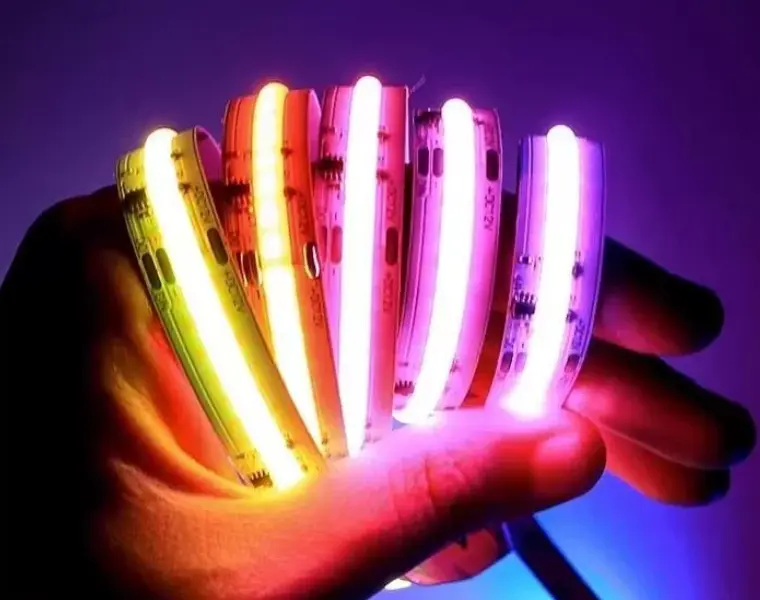
Chip-on-board construction, the basis of our COB LED strip range, places dense LED chips under one continuous phosphor layer instead of spacing discrete SMD packages along the PCB. In color-changing versions, red, green, and blue channels sit inside that same emitting surface, so the system can hold a static color, run slow transitions, or drive dynamic scenes without the visible dot pattern that close-view interiors tend to expose.
A standard three-channel RGB COB strip is the practical choice where color effect, brand-color lighting, or general atmosphere matters more than functional white light. Its trade-off is straightforward: white mixed from red, green, and blue together is not equivalent to a dedicated white channel. That single limitation is what the two variants below exist to solve, and it is usually the first thing to settle in a specification discussion.
RGBW and RGBCW: Adding a Real White Channel
RGBW COB strip adds a dedicated white channel, which matters when one run has to deliver both color-changing ambience and usable white light. RGBCW (also written RGB+CCT) goes further by making that white adjustable, supporting warm-to-cool white scenes alongside color effects. The practical cost is channel count: four- and five-channel strips need matching controllers, more conductors in the run, and a clearer zone plan before wiring is fixed on site.
RGBIC: Segment-Level Control
RGBIC COB strip drives separate segments or pixels independently, which is what makes chasing effects, segmented color movement, and pixel mapping possible at all. Where a project needs that behaviour, compare RGBIC against a full addressable COB LED strip build, and review the addressable product line for IC options and control protocols before the specification is locked.
Why COB Technology Works for Color-Changing Linear Lighting
Color-changing lighting is judged first on visual smoothness. If the strip shows visible LED dots, the installation reads as unrefined, and the effect is most obvious in close-view commercial interiors where guests sit or stand within a metre of the light line. COB construction suppresses that dot pattern through denser chip spacing and a continuous light-emitting surface.
This is why COB is worth the cost premium specifically in positions where the strip itself is visible, or where the light line reflects off an adjacent surface and any dotting is doubled. Bar fronts, display shelves, wall grooves, ceiling coves, and brand-feature walls all fall into that category. In fully concealed positions with no reflective surface nearby, an SMD strip may be the more sensible commercial choice.
RGB vs RGBW vs RGBIC: How to Choose for a Project
Have an LED Lighting Project?
Share your project requirements — our engineering team will configure the complete LED strip system (strips + profiles + controllers + power supplies) and send you a detailed proposal within 24 hours.
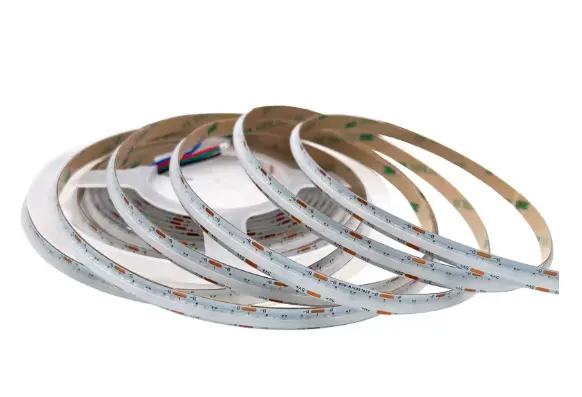
These types are not interchangeable. Each has a different wiring structure, controller requirement, and application fit, and swapping one for another after the drawings are approved usually means re-specifying the controller as well.
| Type | Best For | Key Consideration |
|---|---|---|
| RGB COB strip (3-channel) | Color ambience, decorative lines, brand-color effects | Mixed white is not the same as a dedicated white channel |
| RGBW COB strip (4-channel) | Projects needing both color and practical white light | Requires a compatible RGBW controller and four-conductor wiring |
| RGBCW COB strip (5-channel) | Color scenes plus tunable white lighting | More channels mean more careful control and zone planning |
| RGBIC COB strip | Dynamic segmented effects and animated lighting | Controller, IC type, and wiring layout must be confirmed early |
Voltage, Power and Controller Planning
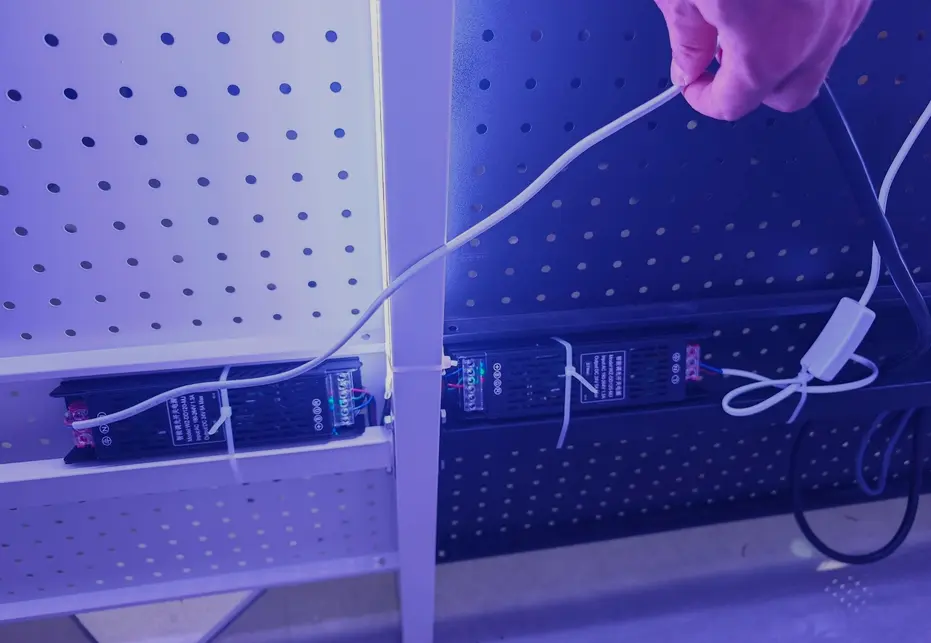
Voltage selection affects run length, voltage drop, power injection points, and controller layout. For B2B projects the strip, power supply, and controller should be planned as one system rather than purchased as three separate line items, because a mismatch between them is the most common cause of rework on site.
Choosing Between 12V and 24V
12V suits short runs, compact display areas, furniture details, and small decorative sections, and it is often the default where a project already has 12V infrastructure in place. For longer commercial installations, 24V COB LED strip is generally preferred because it holds a more stable voltage profile across longer runs and needs fewer injection points to do so. The decision should be made against the longest continuous run in the drawings, not the average.
Controller and Power Supply Matching
Three-, four-, and five-channel strips each require a different control method, and segmented types add a protocol question on top. Buyers should confirm voltage, channel type, total current, dimming method, control protocol, and zone count before approving samples. Where dimming behaviour is part of the brief, our guide to how dimming and control interact covers the driver-side decisions that follow from these choices.
Where These Strips Earn Their Place in Commercial Projects
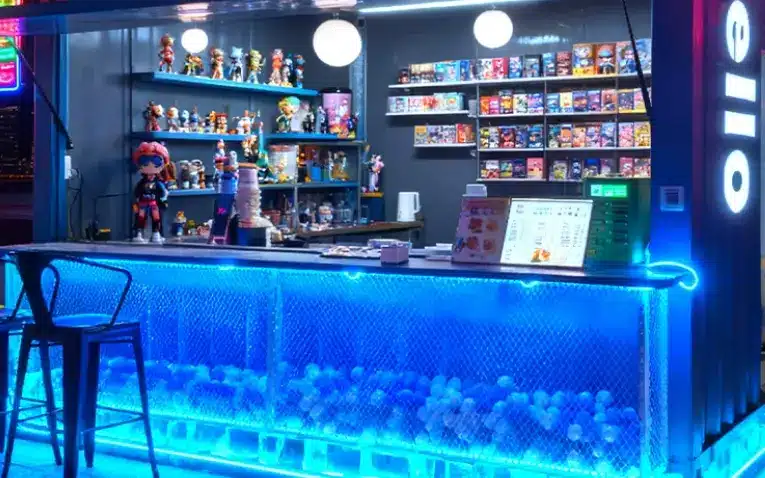
Color-changing COB strips are most useful where color, atmosphere, and visual continuity affect the customer experience directly. In commercial work they are not decorative accessories bolted on at the end; they are part of the lighting design and the brand environment, and they are specified at drawing stage alongside the architectural details that will conceal them.
Restaurant, Bar and Hotel Scenes
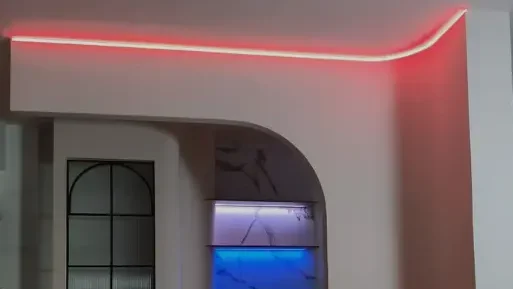
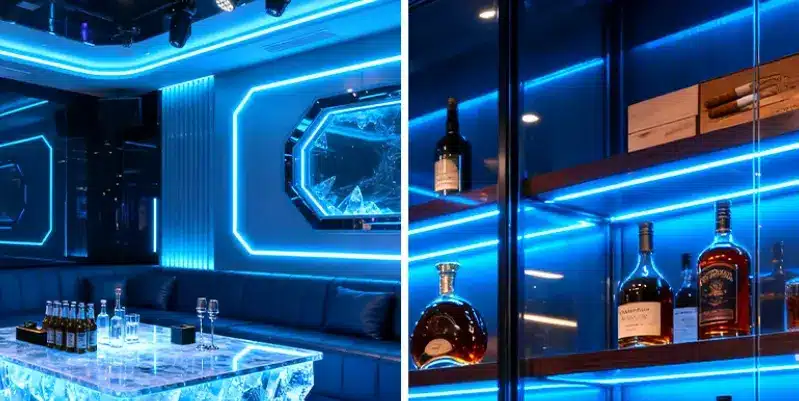
Restaurants and bars typically need distinct scenes for daytime service, evening ambience, and event modes, which is a control requirement as much as a product one. Common positions are under bar counters, behind wall panels, inside ceiling coves, and around feature structures. Hotels use the same products in lounges, corridors, reception areas, and decorative coves, though RGBW is often the better fit there because one run has to cover both atmosphere and practical white light. A related restaurant RGB cove project shows how these positions are handled in practice.
Retail, Display and Exhibition Spaces
Retail projects may lock the strip to a single brand color or run full color control to follow seasonal displays. For display cases and product areas, buyers should decide separately whether accurate product presentation needs a dedicated high-CRI white source, since color-changing channels are not intended to carry that function. Exhibition booths, event spaces, and brand installations add a different constraint again: fast installation, repeatable results across builds, and reuse. Connector quality, power layout, and controller setup should all be confirmed before shipment on that kind of work.
Product Selection Checklist for Importers and Contractors
Professional buyers should evaluate an RGB COB LED strip against a specification checklist rather than comparing price alone. A cheaper strip creates real cost later if the voltage, controller, width, or color behaviour does not match what the project actually needs.
- Confirm whether the project needs three-channel RGB, RGBW, RGBCW, or RGBIC.
- Check whether 12V or 24V suits the longest continuous run in the drawings.
- Confirm PCB width against the aluminium profile or the machined groove.
- Review power consumption per metre and size the supply with headroom.
- Check controller compatibility and channel count before bulk ordering.
- Confirm the IP rating for indoor, damp, or outdoor positions. Senfey’s COB color range is rated IP20 per IEC 60529, so damp and exterior locations need a separately specified waterproof build.
- Request samples before final project approval.
- Confirm packaging, reel length, and batch consistency for wholesale supply.
Which Specification to Start From
For color-changing COB work that needs a dense chip layout and 24V operation, Senfey’s 840 LEDs/m 24V RGB COB strip is a sensible starting point. It is a 10 mm PCB at IP20 with CRI 90, which suits commercial ambience, retail, hospitality, and project-based lighting designs where the strip sits in a dry, concealed or semi-visible position.
Before an order is confirmed, buyers should supply the installation length, voltage preference, control method, target lighting effect, and environmental conditions. With those five inputs a manufacturer can recommend a strip, controller, power supply, and installation approach that work together, instead of quoting a strip in isolation.
FAQ
What is an RGB COB LED strip?
It is a color-changing linear light built with chip-on-board construction, which gives a smoother light line than discrete SMD packages. Red, green, and blue channels are combined in one emitting surface to produce static colors, transitions, and dynamic scenes.
What is the difference between RGB and RGBW COB strips?
Three-channel versions use red, green, and blue only. RGBW adds a dedicated white channel, which is the better choice when a single run has to provide both color ambience and usable white light.
Is COB better than SMD for color-changing runs?
COB generally gives a smoother, less dotted appearance than most SMD equivalents. SMD can still be the right commercial choice depending on budget, brightness target, and whether the strip is visible at close range.
Can a color-changing COB strip be addressable?
Yes. COB strips can be built as RGBIC or addressable versions. These need compatible ICs, controllers, wiring, and a control plan agreed before manufacturing.
Should I choose 12V or 24V for a color-changing run?
12V works for short runs and compact installations. 24V is usually preferred for longer commercial runs because it holds voltage more stably and needs fewer power injection points.
Can these strips be used in restaurants and bars?
Yes. Three-channel and RGBW COB strips suit bar counters, ceiling coves, wall accents, and decorative ambient lighting across restaurants, bars, and hospitality spaces.
Can Senfey customize color and channel specifications?
Senfey supports project-based specification discussion covering voltage, channel type, controller matching, reel length, and application requirements. Project drawings or installation details make those recommendations considerably more accurate.
Reference Resources
For broader lighting and control background, buyers may review these industry resources:
Request Samples and Project Support
If you are sourcing RGB COB LED strip lights for a restaurant, hotel, retail, exhibition, or architectural lighting project, prepare your voltage, installation length, control method, and target lighting effect before making contact.
You can contact Senfey to request samples, discuss custom specifications, or get support with project quotation and controller matching.
