
Use a compatible LED strip amplifier, also called a power repeater, when more analogue LED strip must follow the same dimming or colour commands and the existing controller cannot carry the added load. If an existing run is bright near the feed and dim at the far end, check voltage drop first. A new feed layout may solve that problem.
Choose the fix before you order parts
| What you see | What to check and quote |
|---|---|
| More runs, same scene | Compare the new load against both the controller's total and per-channel limits. If it exceeds either limit, price a compatible repeater and power for its branch, or a higher-rated controller with separate feeds. |
| Far end is dimmer or shifts colour | Ask the installer to check the feed and far-end voltage under load. If the supply and controller have capacity, quote shorter runs or another feed from the appropriate controlled output, following the strip maker's layout and maximum feed length. |
| Extra runs need separate scenes | Quote independently controlled outputs or receivers. A repeater follows the upstream signal. See how to plan separate zones. |
| Pixels flicker or lose data | Check the pixel protocol, data path and supply separately. Select pixel-specific equipment where needed. See the addressable strip controller guide. |
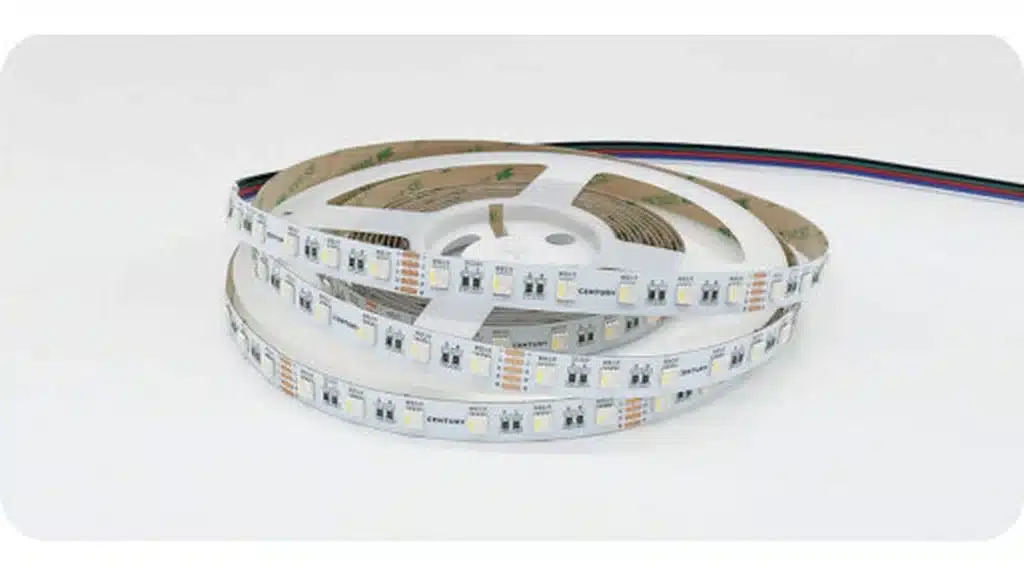
A repeater uses a compatible controller signal to drive its own strip load from a DC supply. For analogue RGB or RGBW, follow the manufacturer's connection diagram for each controlled branch. Feeding a colour-changing strip straight from a raw power supply can bypass the control outputs. ConTech four-channel repeater example
Match the channels and rate the repeater branch
Specify voltage, PWM input compatibility, common polarity and the channels you actually need. Analogue RGB typically uses three channels. RGBW uses four when the white channel is separate. RGB plus tunable white typically needs five. Compare each channel's maximum load with the repeater's limit, then compare the highest simultaneous load with its total rating. Check the power supply's usable capacity for everything it serves.
Ask the supplier for the connection diagram for the exact model, especially when two supplies are involved. Keep their powered branches separate unless the equipment documentation explicitly permits the proposed connection. See the ConTech RGBW repeater diagram for a manufacturer example. Size leads and connectors for the planned current and installation. Read the multi-run power supply guide.
Worked example: three RGBW displays, one scene
Need LED strips for your order?
Tell us the strip type or model, key specifications, quantity in metres and destination country. We can share actual product photos, check available CE/RoHS documents for the selected model, and suggest compatible power supplies or controllers.
Assume each display has a separate 4 m, 24V analogue RGBW run. Each draws up to 0.5 A on each RGB channel and 1.5 A on white, or 3 A total when all four channels run together. The controller is rated at 2.5 A per channel and 8 A total.
| On one output | White channel | Total load | Decision |
|---|---|---|---|
| One display | 1.5 A | 3 A | Passes both current checks. |
| Two displays | 3 A | 6 A | Exceeds the white-channel limit. |
| Three displays | 4.5 A | 9 A | Exceeds both limits. |
One option is to keep one display on the controller and quote a four-channel repeater for the other two, with usable ratings that cover 3 A on white, 1 A on each RGB channel and 6 A combined. The two added runs draw 144 W at 24V before repeater consumption or supply derating. Price an upgraded controller too if all feeds can be routed from one location. Use the quoted strip's actual load data. See a detailed 24V RGBW sizing example.
Send one schedule for the complete bulk order
- Strip runs. Give the strip model, voltage, run lengths, longest feed and quantity of each layout.
- Control and power. Give the controller model, channels, loads, scene groups, available supply locations and equipment to keep.
- Parts and approval. Ask for quantities and model references for the controllers, repeaters, power supplies and leads. Approve a sample in both the brightest required scene and at the lowest working dim level.
Browse LED strip controllers, power supplies and connection accessories.
Need to quote several matching displays? Send Senfey the run schedule, desired scenes and quantities. Tell us which strips, controls, supplies and leads you need priced together.
Request a project quote →