Product Overview
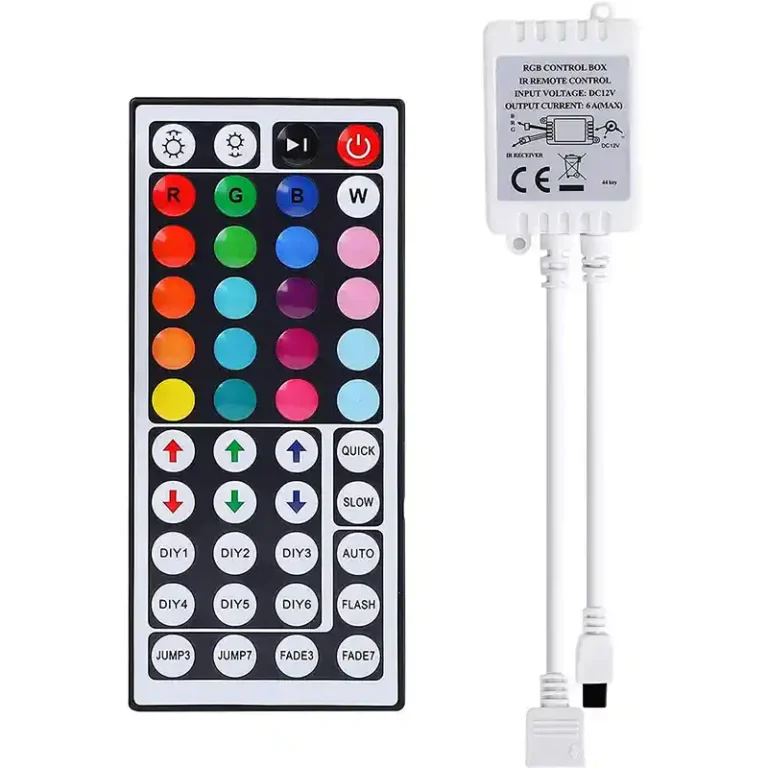
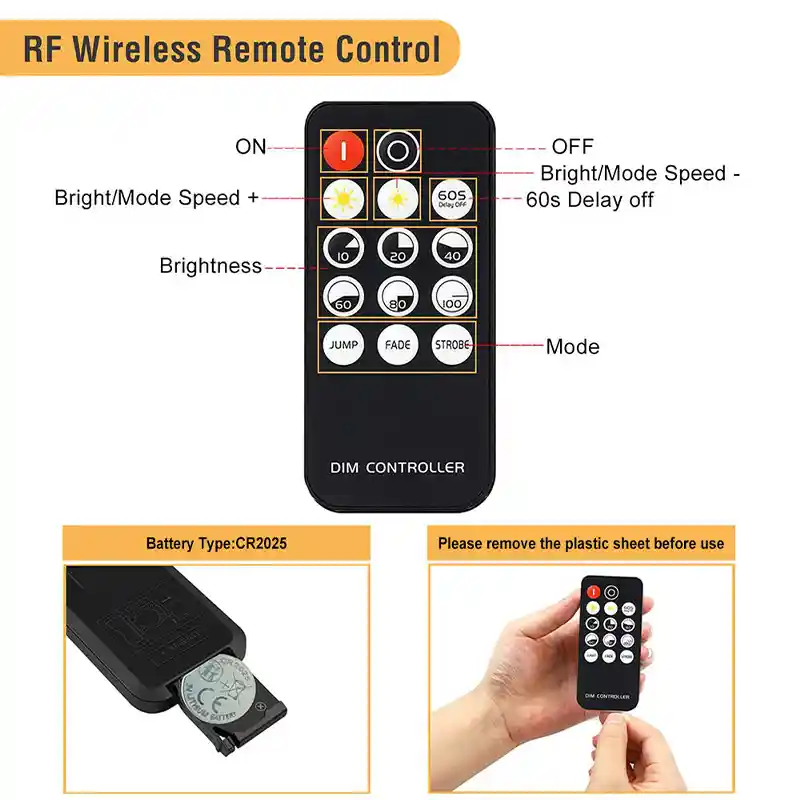
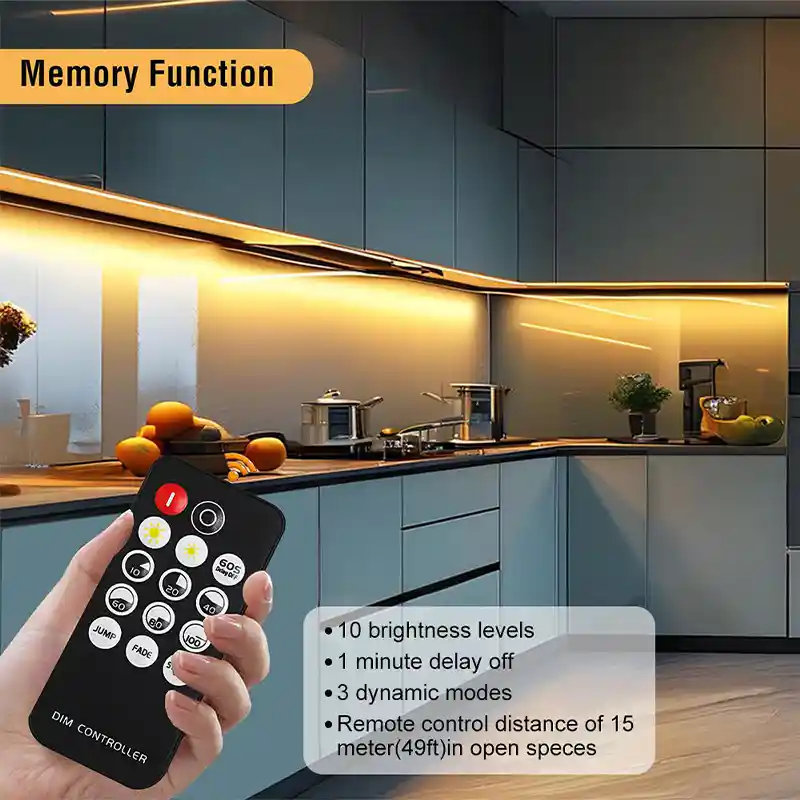
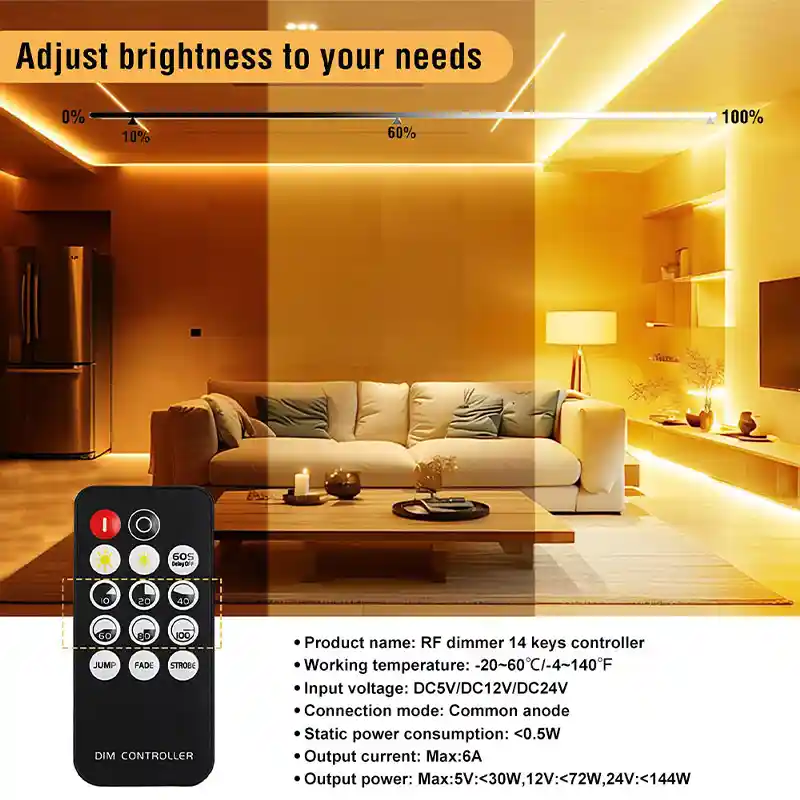
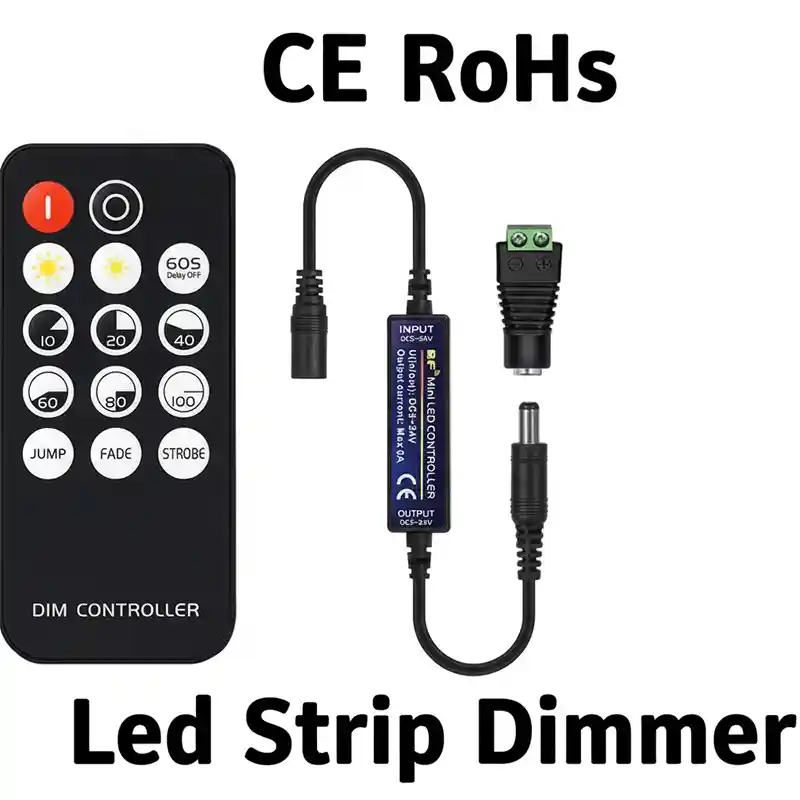
Once a floor has more than one lighting zone, the question stops being how much load one dimmer carries and becomes how many receivers a single handset can address. The ES-LC-DIM-018 is Senfey’s 14-key RF dimmer for single-colour 12V and 24V LED strip, and it is specified for exactly that: several receivers, one remote, and group codes allocated per zone so the third floor does not answer the fourth floor’s handset. RF is the other half of it. The receiver never has to be visible or aimed at — it sits in the void above the run it drives, and the operator holds the handset pointing at nothing in particular.
| Control | 14-key RF handset; no line of sight to the receiver |
| Zoning | Several receivers from one handset; group codes set to order |
| Output | Single channel, single colour |
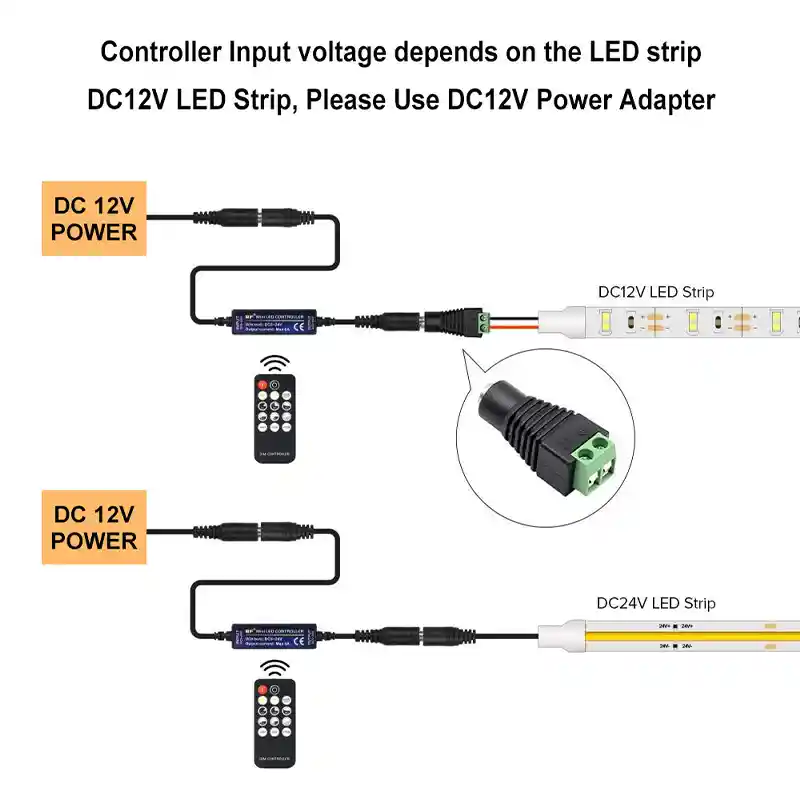
| Termination | Pigtail or terminal block to order |
Best For — Which Projects This Fits
Office floors divided into bays. Open-plan lighting is rarely one zone: the perimeter, the core and the meeting rooms all want their own level, and each gets a receiver rather than a wall plate and a chase back to it. Bay layouts like these run through our office linear ceiling projects.
Hotel floors and back-of-house. Housekeeping carries one handset and works the floor with it, which is the practical reason group codes matter — the same remote must reach every zone it is meant to and none that it is not.
Where the level is set from where you stand. Not at a plate by the door, and not by reaching the unit. This suits any client still adjusting levels after handover, which is most of them.
Kit families built around the handset. Resellers stock it as the RF option alongside the wired dimmers in our dimmable COB range, since the receiver side changes nothing about the strip specification.
Not For — When to Ask Us for a Different SKU
One warning belongs on this SKU more than any other in the range: metal defeats RF. A receiver closed inside a steel ceiling box, run in metal trunking or tucked behind aluminium trim will lose most of its range, and it fails as an intermittent fault rather than a dead one — worse to commission than a unit that simply does not work. Mount it outside the metal, and tell us if you cannot. Second: a group code makes several receivers answer together, it does not make them output identically. Where one unbroken length has to read as a single brightness, that is a job for one high-current channel, not four receivers sharing a code. Colour is the third limit: this decodes a brightness level and nothing else, so RGB, RGBW, RGBCW, tunable-white and pixel strip are all other products. Housing is dry-indoor. Where zones are assembled from cut lengths, the connector guidance applies to the joints.
Customization & Inquiry
Handset and receiver housing carry your branding, group codes are allocated across floors or wings before anything ships, receivers are built with pigtails or terminal blocks, and the whole set can leave here as one kit with strip and driver.
What to send us: a zone list, and against each zone —
- Which handset operates it — that mapping is the group-code allocation, and getting it right on paper beats re-pairing units up a ladder.
- Its load, so that receiver gets the right rating.
- What the receiver is enclosed in, flagging any that end up inside metal.
- Distance and wall count from where the operator stands.
Request a Project Quote — that list comes back as a receiver schedule with the codes already assigned.