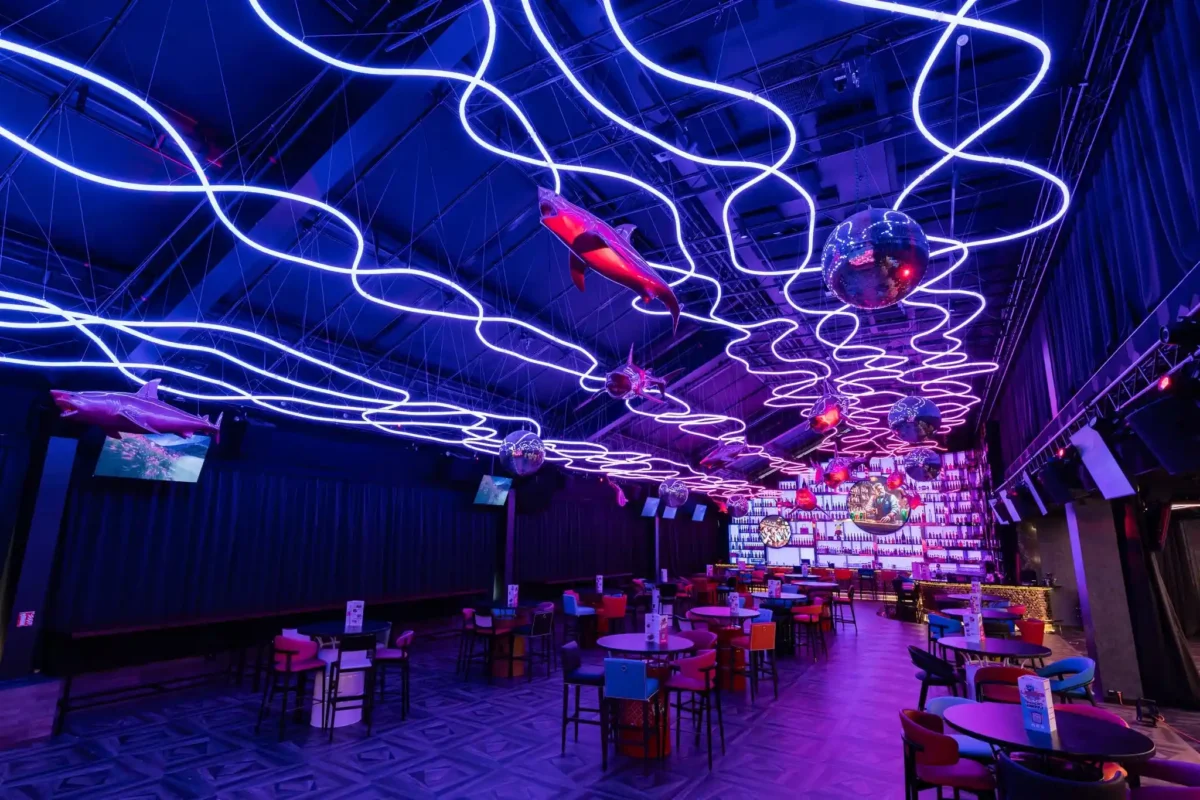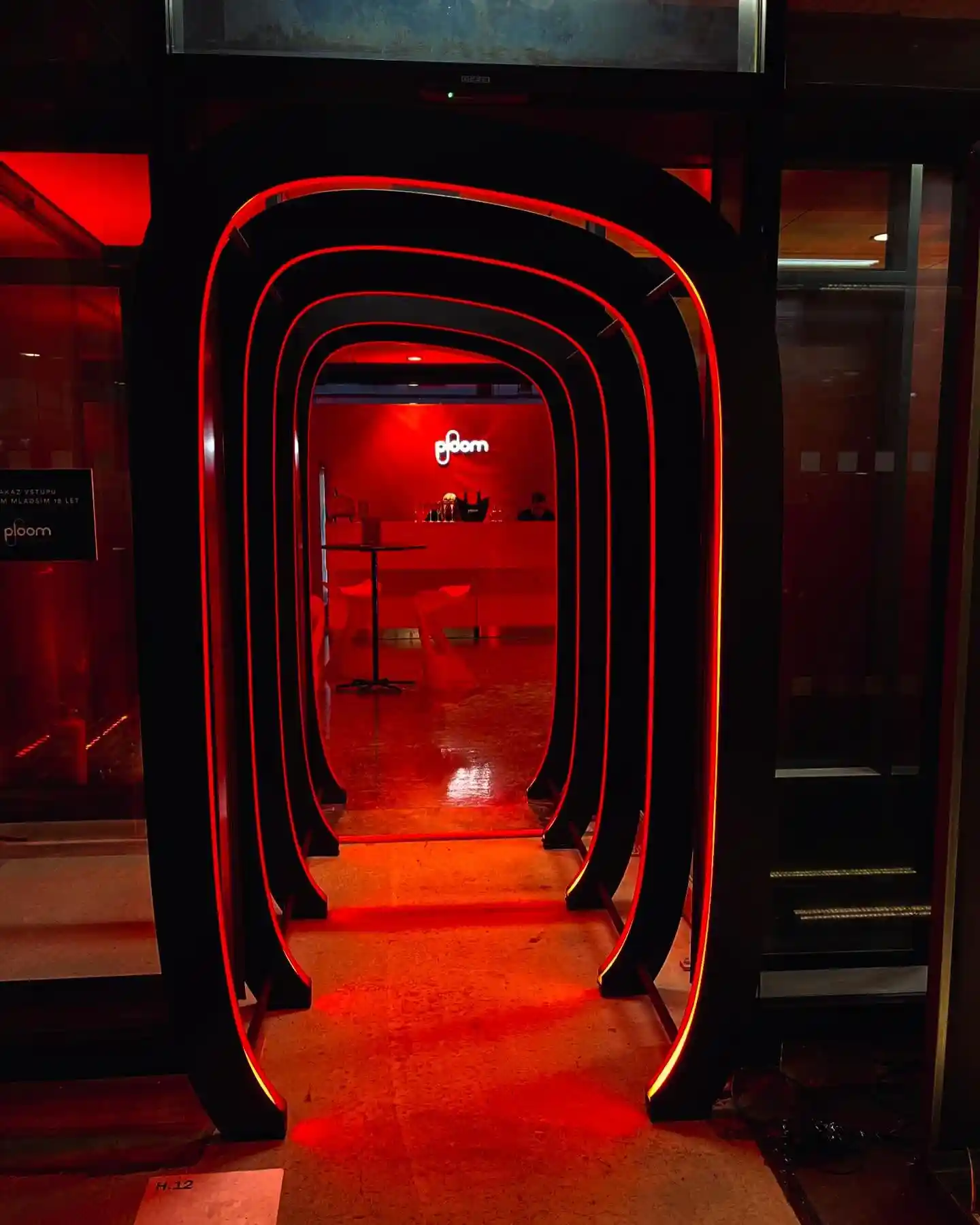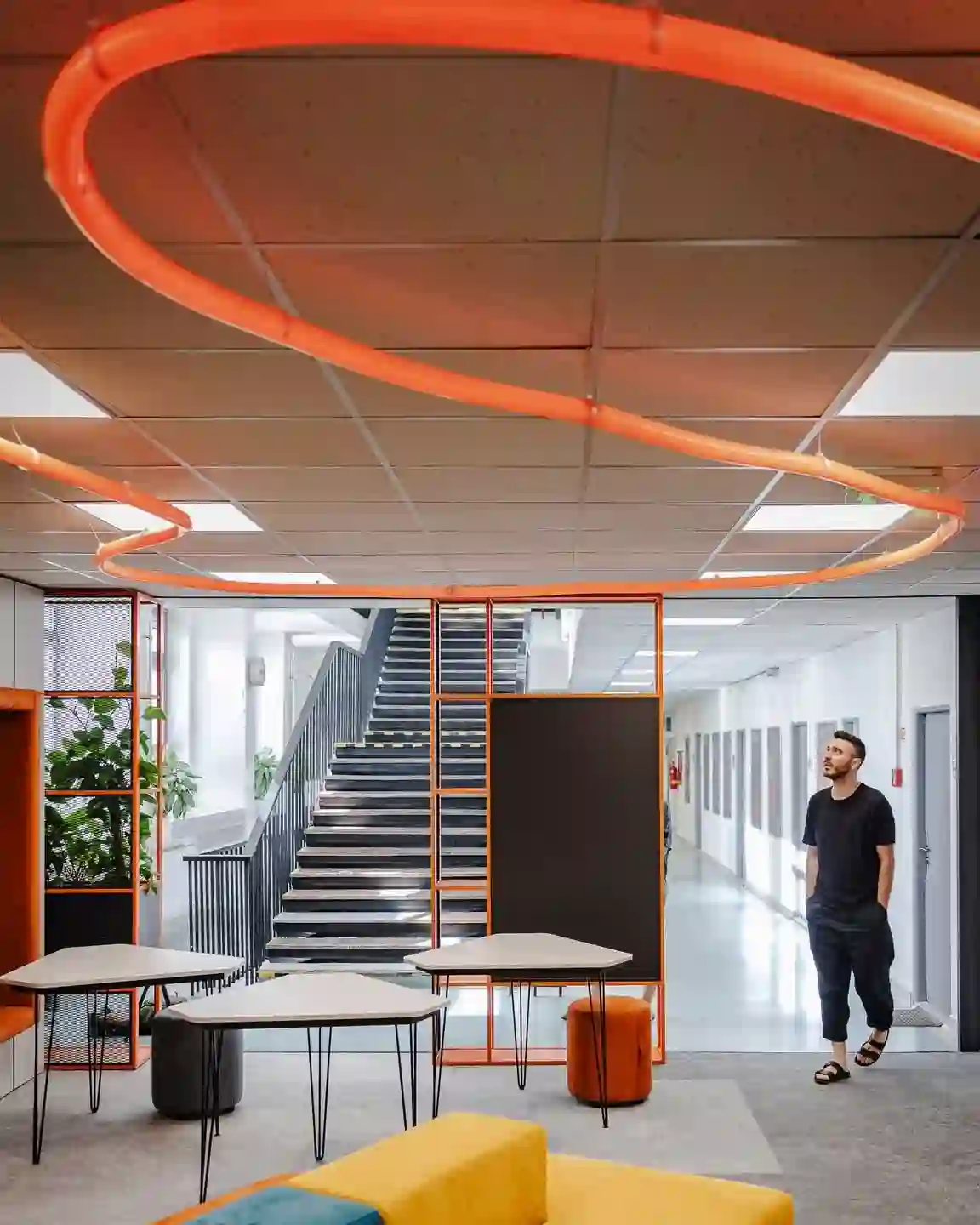
This case documents retail pop up rgb led strip lighting for a five-day fashion capsule launch in a Malmö shopping-centre atrium — an Approx. 48 m² booth, one 14-hour build night, and a hard requirement that a single counter staffer could change mood with one button press, no phone and no laptop. Part of our retail store LED lighting work.
The Controller Question That Reorganised the Zones
The brief asked for one physical control point. Our RGB controllers are IR handsets — ES-LC-RGB-016 is a 44-key IR unit, not a wired panel — and one drives one colour bus. Four zones on one handset means all four change together: right for scene changes, wrong for the signage, which had to hold one colour all day as a photo backdrop.
An RGBW strip makes it worse: it has a fourth channel an RGB controller cannot address, so the white sits dead. Retail pop up rgb led strip lighting fails here more often than on any strip parameter.
What retail pop up rgb led strip lighting needs here is two control buses, not four. Bus 1 carries niches and perimeter wash on one handset — the scene layer, which should move together. Bus 2 carries signage and plinth, set once at build and left alone, its handset taped inside the counter drawer. The niches use RGB, not RGBW: a legible daytime white comes from a separate fixed-white circuit on its own dimmer, because mixed RGB white renders fabric badly at any CRI.
Products Used
| Role | SKU | Specs | Approx. Use |
|---|---|---|---|
| Display niches, RGB scene | ES-COB-840-10MM-24V-RGB | RGB COB, 840 LEDs/m, 10 mm, 24V, CRI 90, IP20 | Approx. 9 m |
| Perimeter wash, RGB scene | ES-COB-840-10MM-24V-RGB | Same reel, same bus — one bin across both zones | Approx. 22 m |
| Entrance archway wordmark | ES-NEON-SIGN-02 | RGB silicone neon flex 6 × 12 mm, 12V/24V, IP67, 108 LEDs/m, CRI 80 | Approx. 6 m |
| Underplinth glow | ES-5050-60-RGB | SMD 5050 RGB, 60 LEDs/m, 10 mm, 12V/24V, CRI 80, IP20 | Approx. 5 m |
| Control | ES-LC-RGB-016 | 44-key IR RGB controller, 12V/24V, IP20 | 2 units, one per bus |
Niches and perimeter run the same SKU off the same bin deliberately: two RGB densities on one handset drift apart at low output, and with both in one photo that reads as a fault. The 840 LEDs/m part earns close range — at the Approx. 0.5 m a shopper stands from a niche the eye resolves Approx. 0.15 mm, so any spaced-package strip shows dots. Hence its place in our RGB COB LED strip range. The plinth is hidden uplight Approx. 300 mm off a matte panel, so 60 LEDs/m SMD is genuinely enough at a fraction of the cost. The archway takes silicone neon flex because a wordmark bends in the plane of the strip’s width, where a PCB strip cannot go at any radius — the construction logic behind bar-signage LED neon flex. Indoors its IP67 matters less than a jacket that survives packing and unpacking.
The 14-Hour Build Night, and What Made It Fit
- Five labelled bundles, cut to length. Niche-L, Niche-R, Perimeter, Sign, Plinth — each with strip, channel, feed cable and connectors tied together. Nobody solders at 02:00.
- Channels clip to the booth’s own extrusion. No fixing into mall fabric, signed off by centre management before build.
- Drivers under the counter in a ventilated crate. Not our parts — our adapters are 12V and this booth needs 24V. Two contractor drivers, Approx. 320 W total, near 65% load.
- Scenes dialled against the printed lookbook, not a monitor. A screen is emissive and roughly sRGB; fabric is reflective under our own light, so the two do not agree — a colorimetry problem, not a taste one. The three brand colours were matched to the physical swatch book at our bench and the values written on a card taped inside the crate.
Five Days, and What Got Measured
- Every circuit is 24V SELV per IEC 61140. All strip here is IP20 and indoor-only, no sleeving claimed.
- Longest run Approx. 11 m per side, mid-fed. Measured drop Approx. 1.6%. RGB makes drop visible as hue shift, not just dimming, which is why the tolerance is tighter than for white.
- Commissioning 18 minutes, because the colour work happened before shipping.
- One 3000K bin on the separate fixed-white daytime circuit, bin ID on the card.
- Risk Group 0 at shopper distance under IEC 62471.
- De-rig Approx. 4 hours, repacked into the same five bundles and reused on a Berlin booth the next month — the real argument for cutting a kit properly.
Four Notes if You’re Specifying a Pop-Up
- Count control buses before counting metres. In retail pop up rgb led strip lighting one IR handset changes everything on its bus at once, so zones that must hold still need their own.
- Do not put RGBW on an RGB controller. The white channel will not respond, and mixed RGB white renders fabric poorly regardless.
- Match colours against physical swatches, not a monitor.
- Ship pre-cut labelled bundles. It buys the build night and makes the kit reusable at de-rig.
Senfey is a Chinese LED strip manufacturer established in 2013, based in Shenzhen, with in-house SMT and silicone extrusion lines producing Approx. 1.2 million metres per month across COB, SMD, neon flex and addressable. See our commercial and retail lighting range or request a pop-up kit quote.