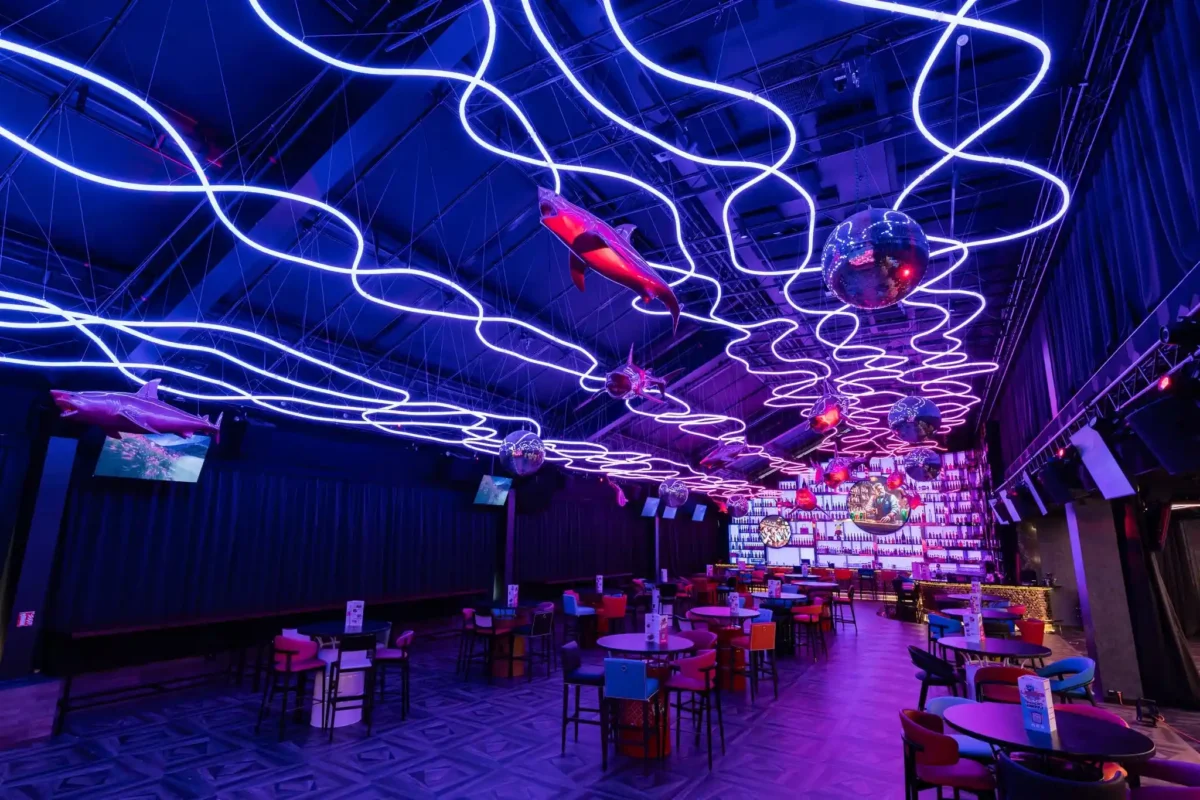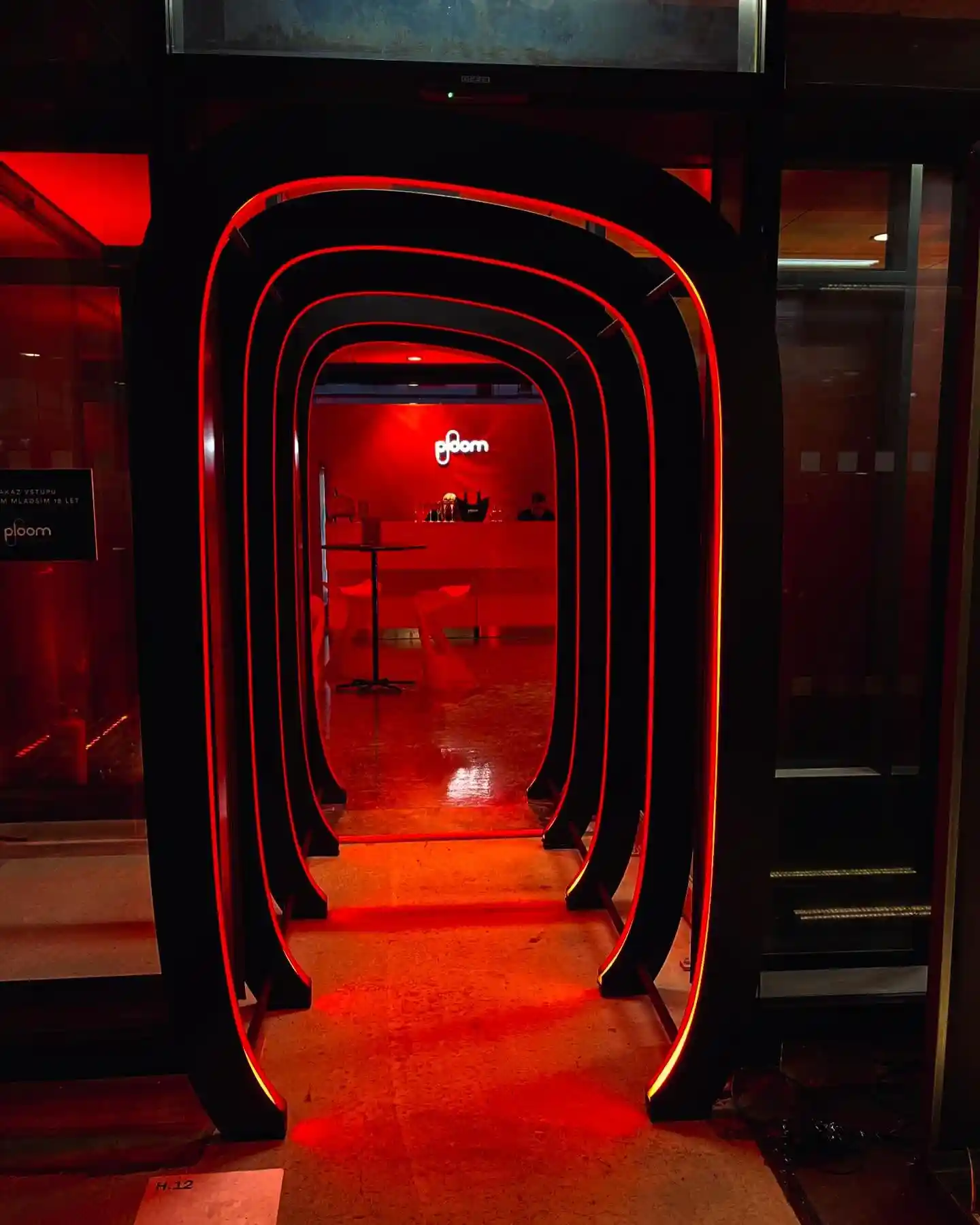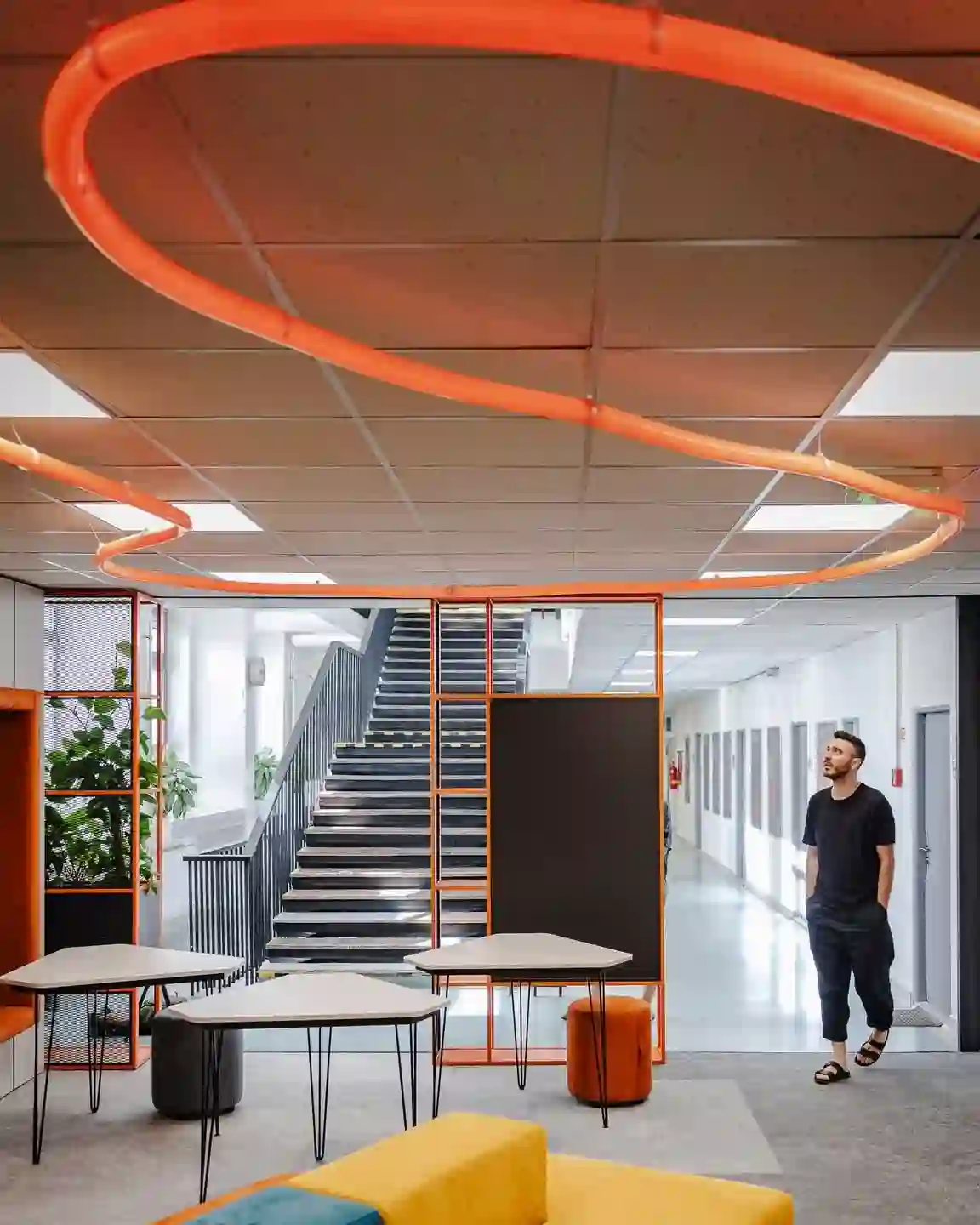
This case documents commercial outdoor led strip lighting on the entrance canopy and storefront edge of a three-tenant retail podium in Cork — one continuous soffit, Approx. 62 m in three zones, switching itself on at civil dusk with nobody touching a switch. Part of our commercial outdoor LED strip lighting work.
Three Zones, Three Wetting Modes — and Why IP65 Was Rejected Twice
Specifying by the word “outdoor” is how commercial outdoor led strip lighting fails on the Atlantic coast. What matters is how water arrives — and neither SMD part is waterproof as supplied: ES-2835-120-8MM and ES-2835-60-8MM are both IP20. Any rating above that we build in the workshop, earned per zone.
- Canopy underside. Vertical rain never lands here, but harbour wind drives spray up under a 1.6 m soffit. Sleeved to IP67, not IP65 — IPX5 is a 6.3 mm nozzle test, and dried salt spray leaves a conductive deposit at the seam.
- Storefront edge. Flush with the fascia, taking direct rain. Natively IP67 neon flex only, because a jacket extruded in one piece has no seam to fail.
- Recessed sign band. No direct wetting, but condensation forms in the channel on cold mornings — the case IP ratings do not cover, because water condensing inside a sealed sleeve cannot leave. Sealed to IP67 with the channel drilled to weep at each low point, so it drains rather than holding moisture against the PCB.
Products Used
| Zone | SKU | Specs | Approx. Use |
|---|---|---|---|
| Canopy underside | ES-2835-120-8MM | SMD 2835, 120 LEDs/m, 8 mm, 12V/24V, CRI 80, 3000K — IP20 as supplied, sleeved to IP67 | Approx. 26 m |
| Storefront edge | ES-NEON-SIGN-03 | PVC neon flex 6/8 mm, DC12V, IP67 outdoor, 120 LEDs/m, CRI 80 | Approx. 22 m |
| Recessed sign band | ES-2835-60-8MM | SMD 2835, 60 LEDs/m, 8 mm, 12V/24V, CRI 80, 3000K — IP20 as supplied, sleeved to IP67 | Approx. 14 m |
Both SMD zones are IP20 parts brought to IP67 by sleeve and pot on our bench — our waterproof SMD strip practice, and why sealing is priced as labour with a test behind it. The storefront edge takes neon flex on two counts: the fascia return curves, and PVC extruded in one piece has no bonded seam where rain hits hardest. In commercial outdoor led strip lighting density follows sight line, not budget: the canopy soffit is Approx. 2.6 m above a pedestrian who sees the strip directly, so 120 LEDs/m; the sign band grazes a recessed panel where the source is hidden, so 60 LEDs/m is genuinely enough. A close-viewed edge needing a continuous emitter rather than denser packages is waterproof COB LED strip territory — not needed at this height.
The 12V Problem on the Storefront Edge
ES-NEON-SIGN-03 is 12V only, not 12V/24V, while the two SMD zones run 24V. This canopy carries two voltages, and pretending otherwise is how a wiring schedule goes wrong on site.
- The Approx. 22 m edge splits into four sub-runs of Approx. 5–6 m, each on its own 12V tap off a 24V bus converted in the riser. At roughly Approx. 9 W/m, a longer 12V run is an overheated joint, not a lighting decision.
- Every circuit is SELV per IEC 61140. Nothing reachable from the pavement exceeds 24V.
- Connected load Approx. 780 W. Drivers are not ours — our adapters are 12V, 96 W, IP20 — so the contractor fitted three IP66 enclosures in the ventilated riser, behind the building line rather than in the canopy void.
- Measured tail drop: Approx. 2.4% on the mid-fed canopy run; Approx. 2.1% worst case on the 12V edge.
- One 3000K bin across every reel, bin ID in the handover file — a colorimetry matter settled on the PO. Three tenants under one soffit means any mismatch reads as a fault line between shops.
What Was Tested, and What the Storm Showed
- Ingress, honestly. Every cut end and joint was immersed at Approx. 1 m for 30 minutes on the bench — the IPX7 procedure in IEC 60529. Site-made terminations got a spray test, which verifies IPX5/IPX6 and is not evidence of IP67. Both logged separately.
- Drip loops. Cable enters every connector from below, so water runs off before reaching the seal — cheaper than any rating and more effective than most.
- Photocell plus astronomical timer. A photocell alone chatters in a storm as cloud cover swings; the timer sets an absolute window and the photocell trims within it.
- Storm on night four, sideways rain for Approx. 4 hours. No faults, no chatter. One week proves workmanship, not a five-year seal, and we said so at handover.
- Pavement illuminance Approx. 65–90 lx, measured rather than modelled.
Four Notes if You’re Lighting a Canopy
- Specify by wetting mode. Direct rain, wind-driven spray and condensation each need a different answer, and only one is an IP number.
- Ask whether the rating is native or achieved by sleeving, then price the sealing labour.
- Let sealed assemblies drain. Condensation inside a sleeve is the failure nobody plans for.
- Check each part’s voltage. A 12V-only neon beside 24V strip changes the whole distribution design.
Senfey is a Chinese LED strip manufacturer established in 2013, based in Shenzhen, with in-house SMT and silicone extrusion lines producing Approx. 1.2 million metres per month across COB, SMD, neon flex and addressable. See our commercial building lighting range or request a canopy lighting quote.