Product Overview
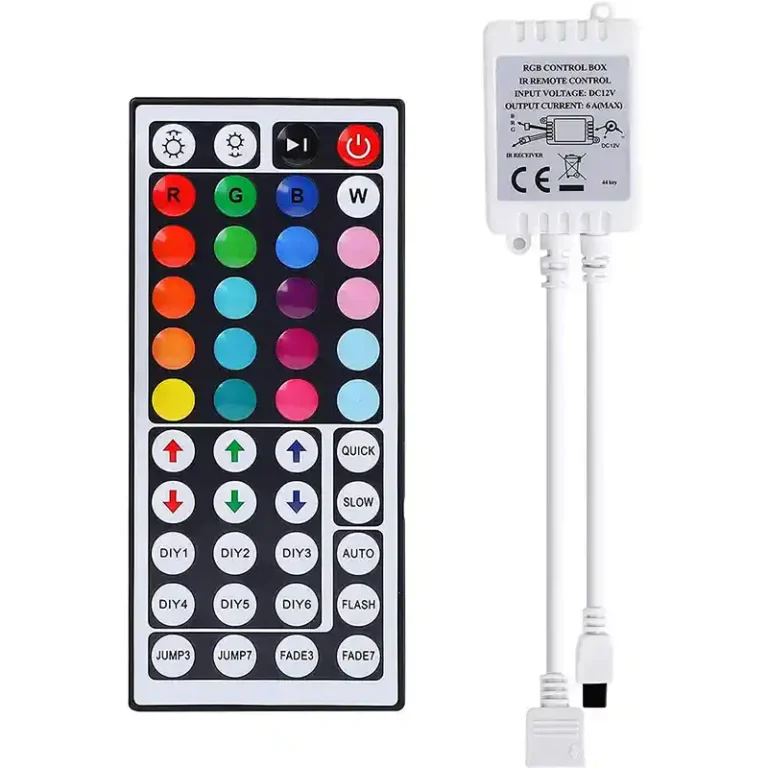
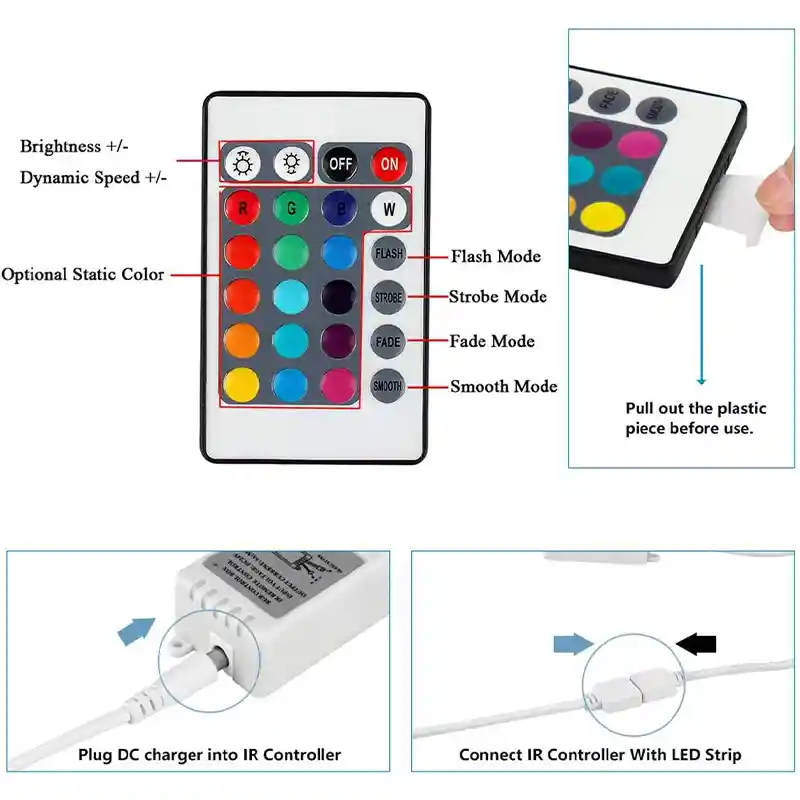
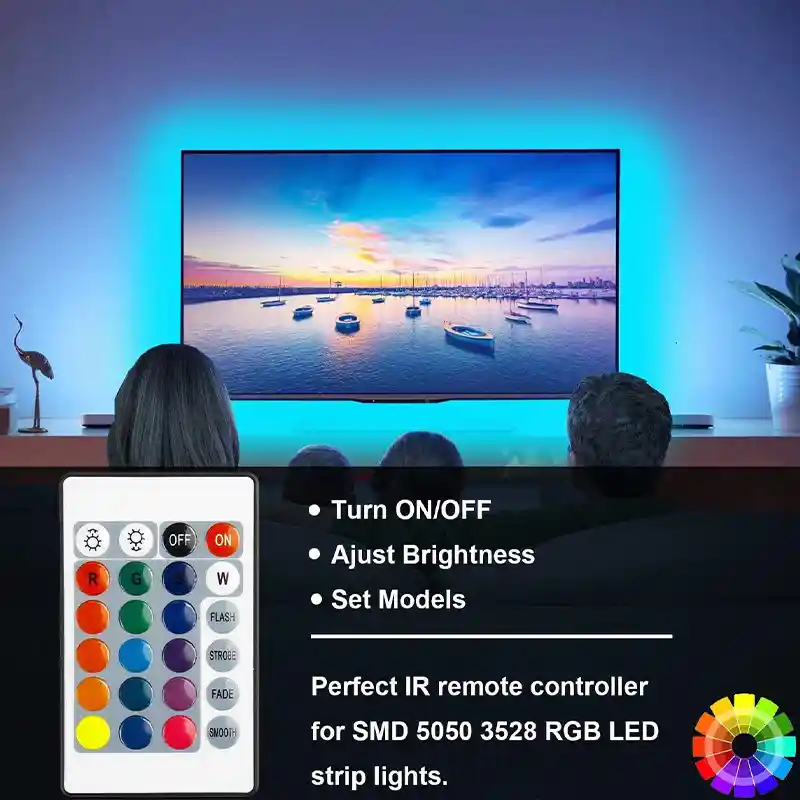
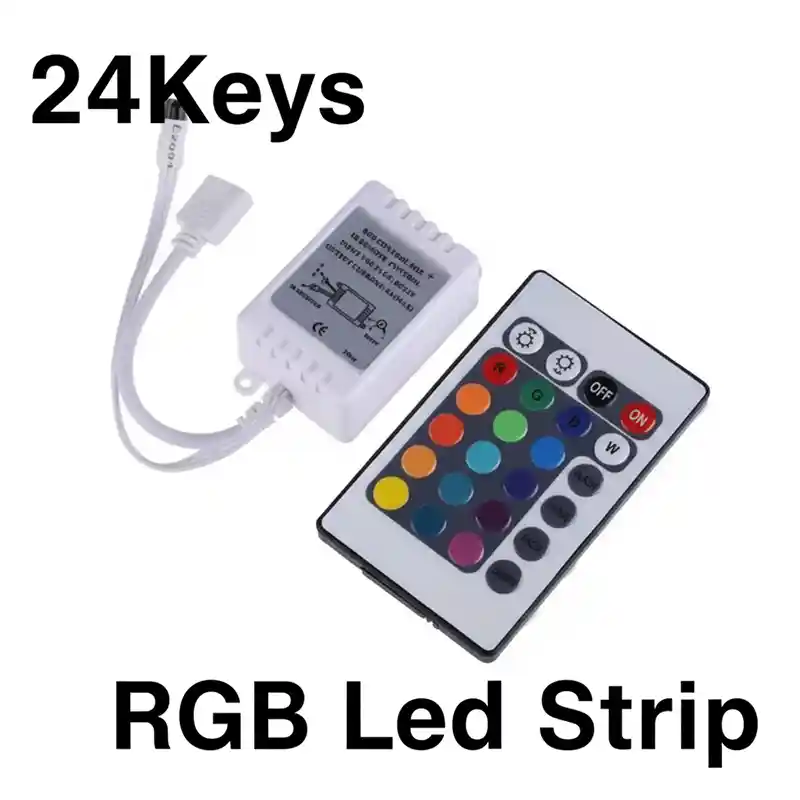
The ES-LC-RGB-010 is Senfey’s 24-key IR RGB controller, wired inline on a common-anode RGB LED strip run at 12V or 24V. The keypad is a fixed set: static colour keys, brightness up and down, and four dynamic modes. Nothing is user-programmable, and on a multi-site roll-out that is the point — the palette a specifier signs off is the palette every branch still has next year, because there is no trim function for staff to nudge it with. IR also needs no pairing: a handset and receiver work together out of the carton, so a hundred rooms commission themselves and a replacement remote is a like-for-like swap rather than a service visit.
| Channels | 3 PWM channels (R / G / B), common-anode RGB strip |
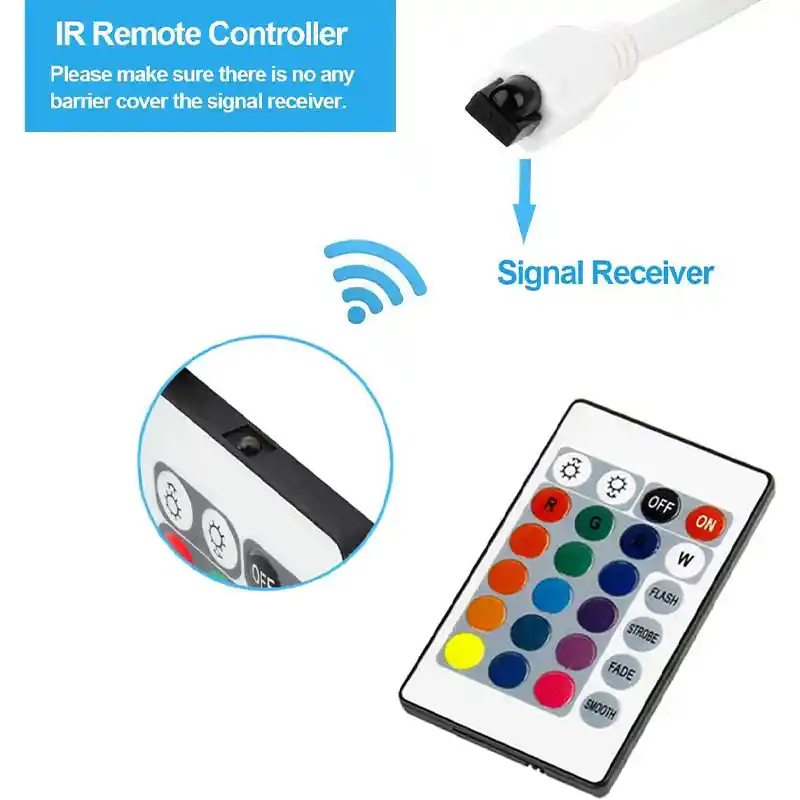
| Control | 24-key IR handset; receiver must be in line of sight, no pairing required |
| Modes | Fixed static colour keys, brightness up / down, four dynamic modes (flash, strobe, fade, smooth) |
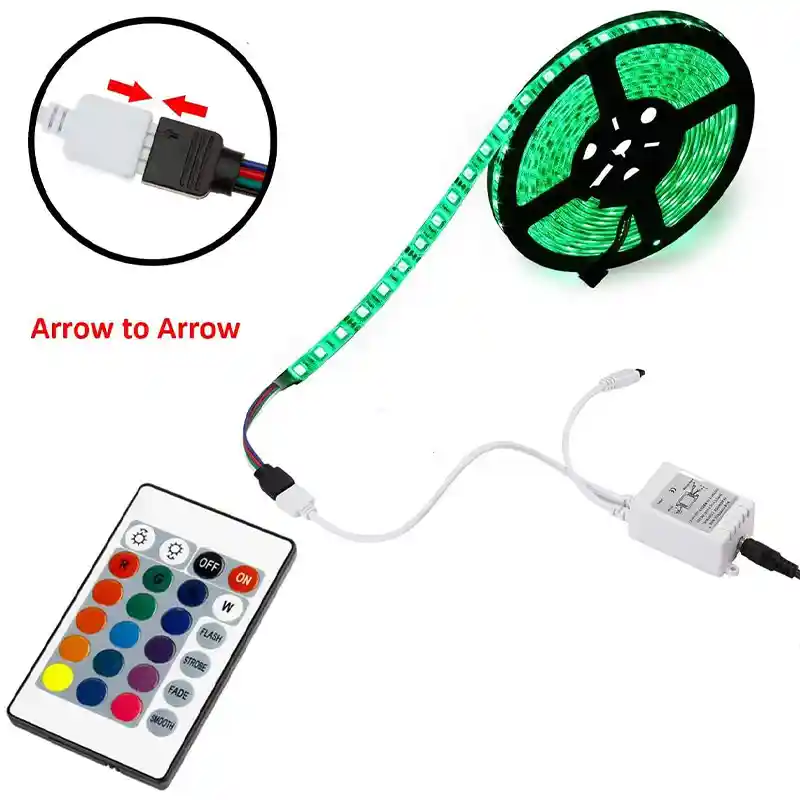
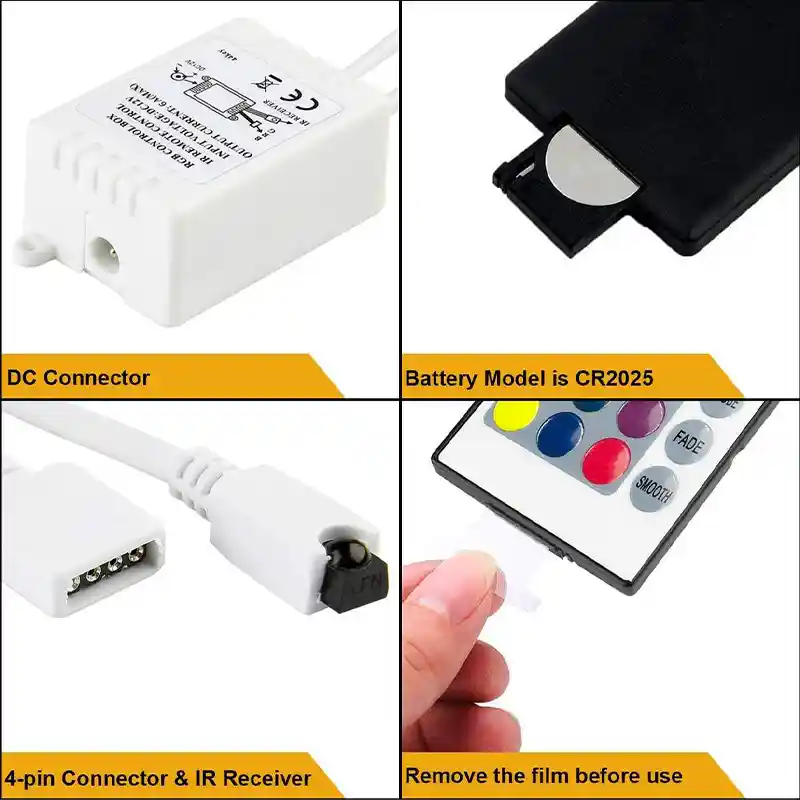
| Wiring | Inline between driver and strip; pigtail or screw terminal |
Best For — Which Projects This Fits
Chain roll-outs that must look identical. A fixed palette cannot drift. Forty branches get the same colour because no key on the handset can change it — and the head-office standard survives staff turnover without anybody policing it.
Showcases and shelf back-light on a seasonal cycle. Where the brief is “make it warm for winter, cool for summer”, a colour key does the job and the receiver hides in the shelf edge. See our retail display projects for how those runs are zoned.
Venues with no technical staff. Nothing to install on a phone, no account, nothing that breaks when the duty manager’s handset updates overnight. A new starter can be shown the two keys that matter in ten seconds.
Rental and event stock. Units are interchangeable, no configuration travels between jobs, and a handset lost on a get-out comes off the same shelf. Sits with our RGB LED strip range as a catalogue default.
Not For — When to Ask Us for a Different SKU
IR carries no addressing, so every receiver in view answers the same key press. In an open-plan room with three receivers exposed, you have one zone whether you wanted one or not — separate zones need the receivers optically screened from each other, or a control layer that addresses them. Tell us the zone schedule and we will say which it is. Range is also line-of-sight: a receiver pushed up into a ceiling void or behind a closed door will not hear the remote at all. If the client wants a specific brand colour rather than a colour from a fixed set, the 44-key controller adds R/G/B trim keys and memory slots. Three channels also means RGBW, RGBCW and tunable-white strip are out, and addressable pixel strip carries data on its own line, which no PWM channel can produce.
Customization & Inquiry
We brand the handset and housing, set the static palette at the factory, supply pigtail or screw-terminal receivers, and pack receiver, handset, driver and strip as one kit.
What to send us in your enquiry:
- How many zones must act independently — the answer decides whether IR works here at all, before anything else is specified.
- Whether those receivers can be kept out of each other’s sight lines, and where the operator stands relative to each.
- The colour references for a factory-set palette, if the roll-out needs one.
- Load per zone, so we can size receivers and the driver behind them.
Send Us Your Project Brief — send the zone schedule and we will confirm whether a fixed palette fits the client, or the trimmable unit does.