
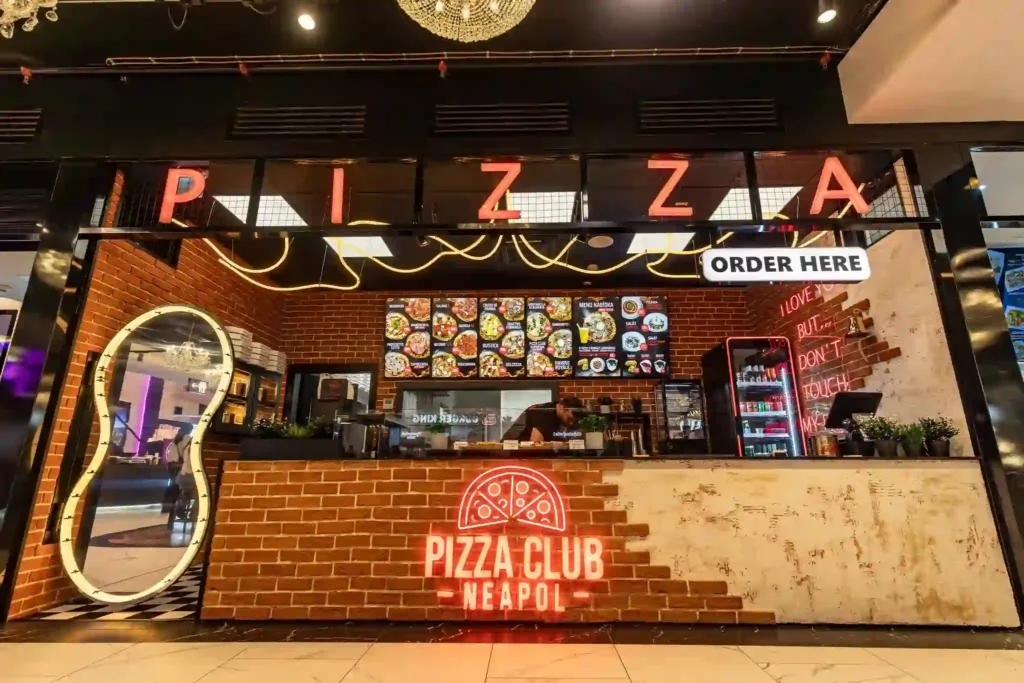
The best LED strip for restaurant lighting is a 24V high-CRI (≥90) COB or SMD 2835 strip in 2700K–3000K warm white, mounted inside an aluminum channel for clean, glare-free installation. For exposed signage and decorative neon-style features, IP65 silicone-jacketed LED neon flex creates the warm, inviting glow modern diners expect. This guide walks restaurant owners, F&B designers, and franchise developers through every specification, channel option, and custom solution needed to deliver a successful restaurant lighting project.
1. Why LED Strip Lights Define Modern Restaurant Atmosphere
Restaurant lighting drives guest mood, dwell time, food presentation, and Instagram-worthy moments — all of which directly affect revenue. LED strip lights for restaurant projects have replaced traditional downlights and pendant-only schemes because they offer continuous, layered, and dimmable light that defines a restaurant’s personality from the moment guests walk in.
Operators choose LED strips for restaurants because they deliver:
- Energy savings — up to 70% less consumption than halogen or fluorescent fixtures
- Long lifespan — 50,000+ hours reduces maintenance during peak service hours
- Design flexibility — fits inside coves, under counters, behind shelving, and in signage
- Branding power — neon-style LED flex builds a recognizable visual identity
- Food appeal — high-CRI strips make food colors pop in display cases and on plates
2. Key Specifications for Restaurant-Grade LED Strips
Restaurant LED strips face heat, grease, frequent dimming cycles, and demanding aesthetic standards. The five specifications below separate true F&B-grade strips from consumer products.
CRI ≥ 90 — Why Color Accuracy Sells More Food
Cheap LED tape strip for restaurant use often has CRI 70–80, making meat appear gray and vegetables look dull. Specify CRI ≥ 90 with R9 (deep red) ≥ 50 for general dining, and CRI 95+ for plated fine dining, open kitchens, and dessert display cases.
Color Temperature — 2700K vs 3000K vs 4000K
2700K warm white is the standard for fine dining, wine bars, and intimate spaces. 3000K suits casual dining, family restaurants, and bistros. 4000K neutral white belongs in fast-casual chains, food courts, and back-of-house areas. Avoid 5000K+ in any guest-facing zone — it kills appetite and ambiance. (See color temperature for the underlying CCT science.)
IP Rating for Kitchen and Wet Zones
Front-of-house LED strips can be IP20, but anything near a kitchen pass, dishwashing area, or bar splash zone must be IP65 or higher. For outdoor patios and rooftop dining, specify IP67 silicone-encapsulated strips.
Dimming and Scene Control
Restaurants change ambiance from bright daytime lunch to dim evening dinner. Specify Triac-dimmable drivers for budget projects, 0–10V or DALI for mid-range, and DMX for venues with dynamic color or scene programming.
Heat and Grease Resistance
LED strips installed near cooking lines or pizza ovens must tolerate ambient temperatures up to 60°C. Use industrial-grade strips with reinforced FPC and silicone overcoats. Strips mounted inside aluminum channels last significantly longer due to passive heat dissipation.
Restaurant LED Strip Specs by Concept
| Specification | Fine Dining | Casual / Family | Fast Casual / QSR |
|---|---|---|---|
| CRI | ≥ 95 (R9 ≥ 80) | ≥ 90 | ≥ 85 |
| Color Temperature | 2700K | 2700K–3000K | 3000K–4000K |
| Lumen Output | 500–700 lm/m | 700–1000 lm/m | 1000–1500 lm/m |
| LED Type | COB | COB or SMD 2835 | SMD 2835 |
| Dimming | DALI / DMX | 0–10V or Triac | Triac or on/off |
| IP Rating | IP20 / IP65 mixed | IP20 / IP65 mixed | IP20 / IP65 mixed |
| Warranty | 5 years | 3–5 years | 3 years |
3. LED Strip Lights for Restaurant: Application Zones
Have an LED Lighting Project?
Share your project requirements — our engineering team will configure the complete LED strip system (strips + profiles + controllers + power supplies) and send you a detailed proposal within 24 hours.
Modern restaurants layer LED strip lighting across multiple zones. Below are the most common application areas and what to specify for each.
Ceiling Cove and Architectural Lighting
Continuous LED strips inside ceiling coves create the indirect glow that defines upscale dining. Use a 24V COB strip at 8–10W/m with 2700K warm white, hidden inside a 30° or 45° aluminum profile.
Under-Bar and Bar Top Lighting
Under-bar LED strips highlight liquor bottles and create the inviting glow that draws guests to the bar. Use IP65 strips with frosted diffusers to soften the light and protect against bar spills.
Menu Board and Signage Backlighting
Backlit menu boards and exterior signage use high-output 24V LED modules or strips. For exposed neon-style branding, IP65 silicone LED neon flex bends into any shape — from logos to slogans like “ORDER HERE.”
Display Case and Food Presentation
Pastry cases, deli counters, and pizza warmers demand CRI 95+ strips to make food colors accurate and appetizing. Use low-output COB strips inside slim channels to avoid heat buildup on food.
Patio and Outdoor Dining
IP67 silicone-jacketed LED strips installed under pergolas, along railings, or wrapped around planters extend the dining atmosphere outdoors. Specify UV-resistant jackets for sun-exposed installations.
4. LED Strip Channel for Restaurant Installations
The right LED strip channel for restaurant projects is just as important as the strip itself. Aluminum channels (also called profiles or extrusions) serve four critical functions: heat dissipation, glare control, protection from grease and humidity, and clean architectural appearance.
The most common channel types used in F&B projects:
- Surface-mount channels — easiest install on existing walls, ceilings, or cabinetry
- Recessed channels — flush with drywall or millwork for a hidden-source look
- 45° corner channels — perfect for under-cabinet and under-bar applications
- Pendant / suspension channels — linear hanging fixtures for tables and counters
- Step / floor channels — recessed at floor level for wayfinding and accent lighting
- Tile-edge channels — embedded in tile gaps for kitchen backsplashes
For restaurants near cooking lines, choose channels with frosted PMMA or PC diffusers (not clear) — frosted diffusers hide individual LEDs and are easier to wipe clean of grease residue. Always specify channel length matched to your strip’s natural cut points to avoid messy field modifications.
5. Custom LED Light Strips for Restaurants: Branding and Signage
Mass-produced LED strips work for generic applications, but flagship restaurants, concept stores, and franchise rollouts increasingly demand custom LED light strips for restaurants tailored to their brand identity.
The most common customization requests:
- Custom-shaped neon flex signage — bent into logos, slogans, or section names
- Non-standard color temperature — bespoke CCT to match brand palette (e.g., 2400K for moody bars)
- RGBW with brand-specific scenes — pre-programmed DMX scenes for happy hour, peak service, late night
- Custom voltages — 5V or 36V for unique enclosures
- Branded packaging and labels — for franchise systems shipping to dozens of locations
- Custom cut-to-length reels — pre-cut lengths matching exact cove or counter dimensions, reducing on-site labor
- Private-label OEM — for hospitality groups building their own lighting spec
A reliable manufacturer should handle custom orders starting at 500–1000 meters MOQ, deliver samples within 7–10 days, and provide bilingual spec sheets for international project teams.
6. Dimming, Controls, and Scene Programming
Restaurants without dimming feel one-dimensional. Multi-zone dimming and scene control allow operators to transform a single space across day parts:
- Lunch scene — 80% brightness, 3000K, energetic
- Dinner scene — 40% brightness, 2700K, intimate
- Late night / lounge scene — 15% brightness, 2400K, moody
- Cleaning scene — 100% brightness, all zones, full visibility
For most restaurants, 0–10V or DALI control with 4–6 dimming zones provides the right balance of flexibility and cost. DMX is reserved for venues with dynamic color or LED feature walls. A matched LED driver and accessories package ensures dimmer-to-driver compatibility and avoids flicker.
7. Certifications Required for Restaurant Projects
Commercial F&B projects must comply with electrical and food-safety codes. Always request and verify:
- UL / ETL — required in the US and Canada for commercial occupancies
- CE / RoHS — required for all EU restaurant projects
- NSF — food contact surface compatibility (for strips installed near food prep)
- FCC — electromagnetic compliance for North America
- IP65/IP67 — independently verified, not just supplier-claimed
- Title 24 / Energy Star — California and US energy code compliance
8. Real Restaurant Project Case Study: Pizza Club Neapol
Pizza Club Neapol is a fast-casual Italian pizzeria operating inside a major shopping mall. The lighting brief called for an authentic, warm Italian pizzeria atmosphere that would stand out in a bright mall food court environment — without overwhelming the customer-facing menu and ordering zone.
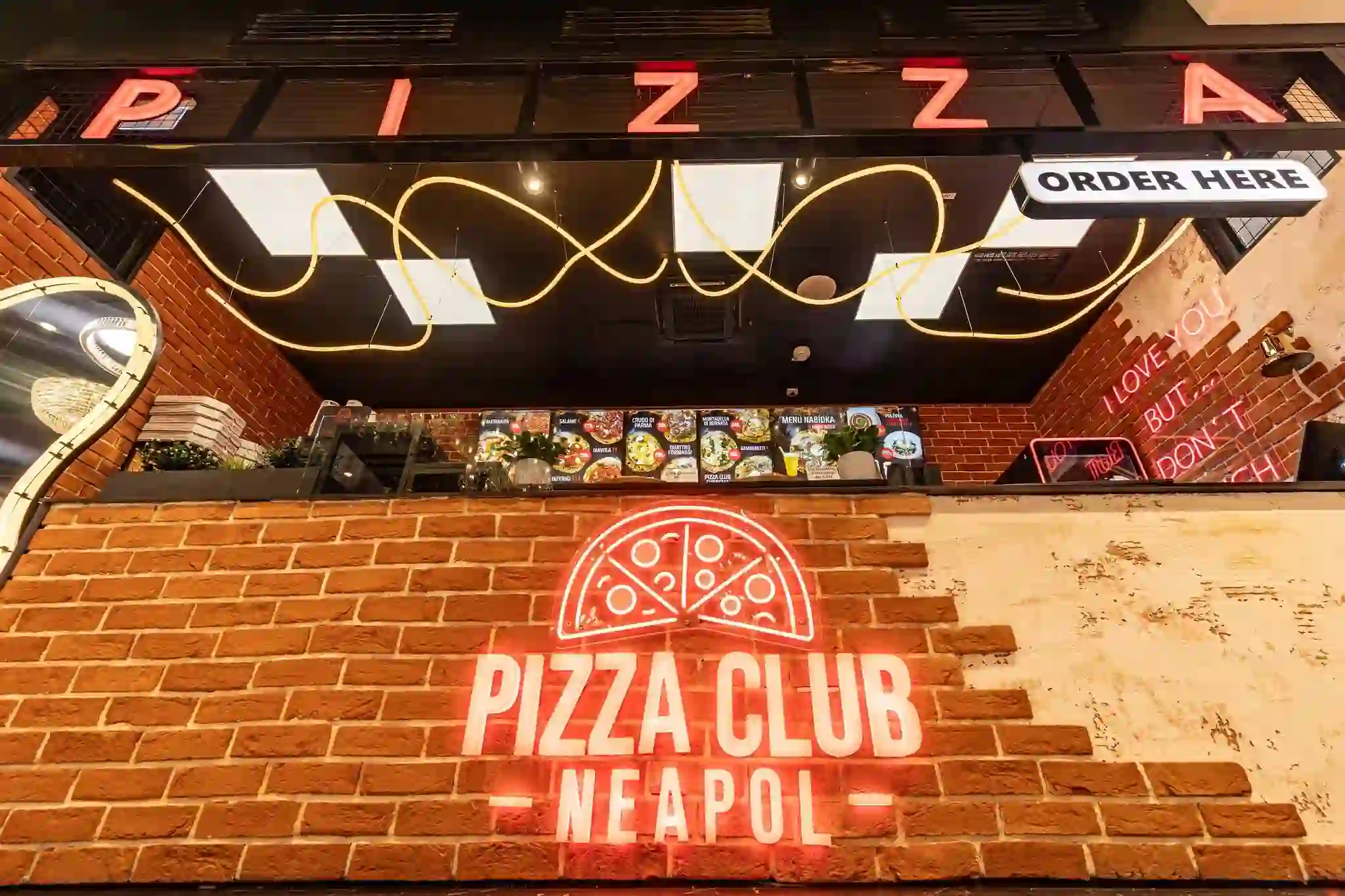
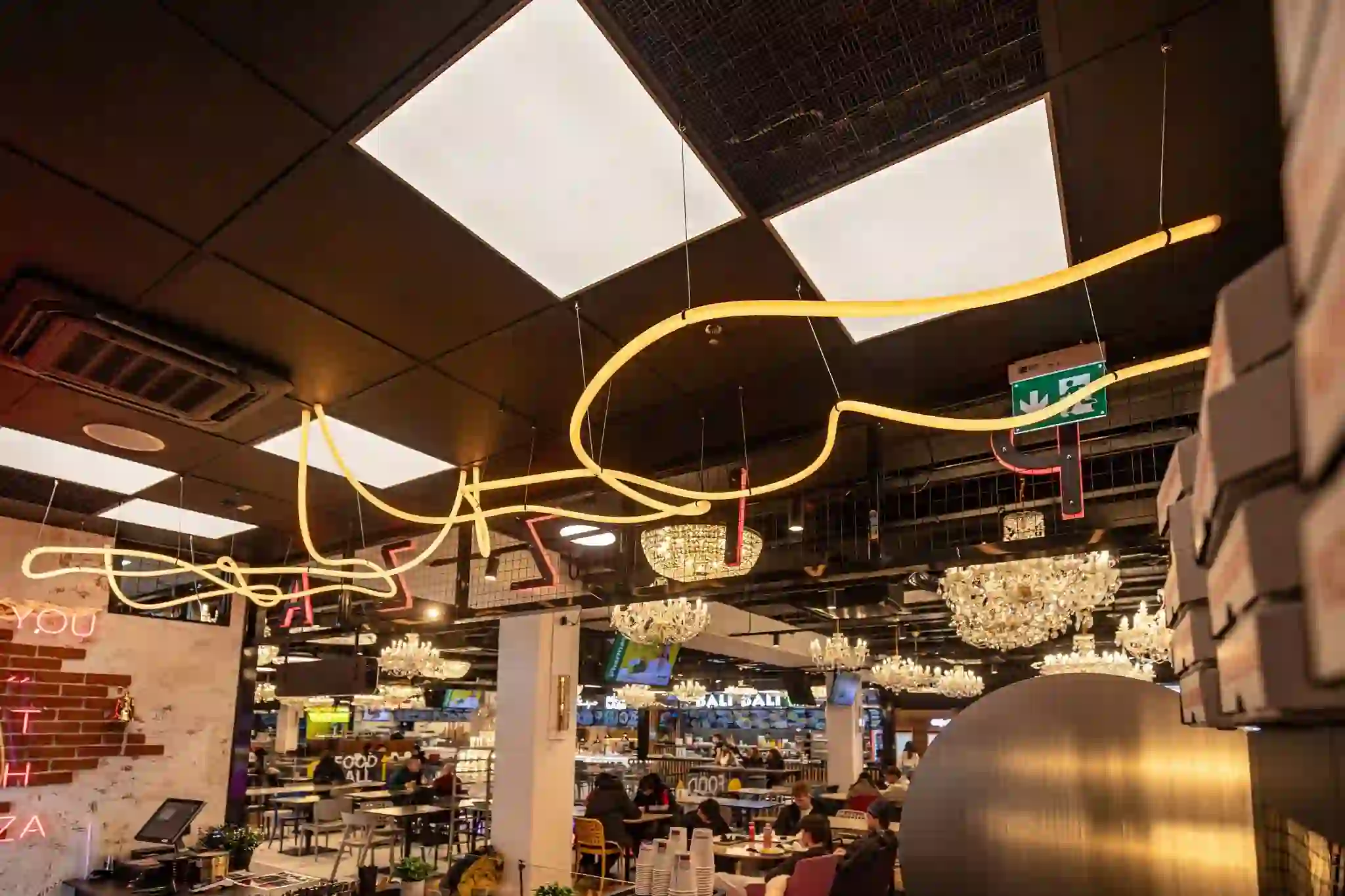
The solution combined three LED strip systems in a single compact storefront:
- Exterior signage — custom-bent 24V silicone IP65 LED neon flex spelling “PIZZA” and “ORDER HERE” in warm white, mounted on an exposed brick feature wall to create the look of traditional pizzeria neon
- Interior sculptural lighting — custom-curved amber LED neon flex pendant suspended above the counter, doubling as both a functional light source and a sculptural branding element that creates a memorable visual signature for the space
- Counter and menu zone — 24V high-CRI SMD 2835 strips inside aluminum channels backlighting the digital menu boards, ensuring food photography appears accurate and appetizing
The result: a visually distinctive storefront that pulls foot traffic from across the mall food court while maintaining clear, well-lit menu visibility at the order point. Total LED strip used: approximately 35 meters across the storefront, all dimmable for opening/closing hour scene control. For a larger F&B reference, see our Prague immersive neon ceiling cocktail lounge case, or browse all commercial lighting projects.
9. Common Mistakes in Restaurant LED Strip Installation
- Wrong CRI — food looks gray and unappetizing under CRI 80 strips
- Wrong color temperature — 5000K+ in dining areas kills atmosphere
- No aluminum channel — exposed strips collect grease, fade fast, and look unprofessional
- Inadequate IP rating — IP20 strips fail within months near kitchens or bars
- Mismatched dimmer — wrong driver type causes flicker, buzz, and color shift
- Heat damage near ovens — strips not rated for high ambient temperatures fail prematurely
- Power supply undersized — drivers running at 100% load fail within 1–2 years
- Skipping branding opportunity — using generic strips when custom neon flex could become a marketing asset
10. FAQ: LED Strip for Restaurants
What LED strip is best for restaurants?
A 24V COB or SMD 2835 LED strip with CRI ≥ 90 and 2700K–3000K warm white is the best LED strip for restaurant lighting. Mount inside an aluminum channel for clean appearance and heat dissipation. Use IP65 in kitchens and bar splash zones.
What color temperature is best for restaurant lighting?
2700K is ideal for fine dining and intimate spaces. 3000K works for casual and family restaurants. 4000K is suitable for fast-casual, food courts, and back-of-house areas. Avoid anything above 4000K in guest-facing zones.
Do I need an aluminum channel for restaurant LED strips?
Yes, aluminum LED strip channel for restaurant use is strongly recommended. It dissipates heat (extending LED life), prevents grease buildup, eliminates glare, and provides a professional architectural finish that exposed strips cannot match.
Can I order custom LED light strips for my restaurant?
Yes, most professional manufacturers offer custom LED light strips for restaurants including custom color temperatures, voltages, cut lengths, neon flex shapes, and private-label OEM. Typical MOQ ranges from 500 to 1000 meters per spec.
Are LED strips safe near restaurant kitchens?
Yes, provided you specify IP65 or higher industrial-grade strips rated for ambient temperatures up to 60°C. Always install inside aluminum channels for additional heat dissipation, and keep drivers in cool, ventilated zones outside the kitchen line.
How much does LED strip lighting cost for a restaurant?
Material cost ranges from USD 8 to USD 30 per meter depending on CRI, IP rating, and custom requirements. A typical 150-seat full-service restaurant budgets USD 3,000–USD 12,000 for LED strip materials, excluding controls and installation labor.
Get Started With Your Restaurant Lighting Project
Specifying the right LED strip for restaurant projects directly impacts food appeal, guest experience, and operating cost. From neon signage that pulls foot traffic to high-CRI display case strips that sell more desserts, professional-grade LED strips and channels deliver measurable returns on investment.
Senfey has supplied LED strip lighting to restaurant groups, hospitality chains, and independent F&B concepts in over 60 countries — including custom neon flex signage and full restaurant retrofits.
